You Tube Fun Alert! A Personal Journey with Martin Scorsese Through American Movies (1995)

scorsese

Now this is a treat:

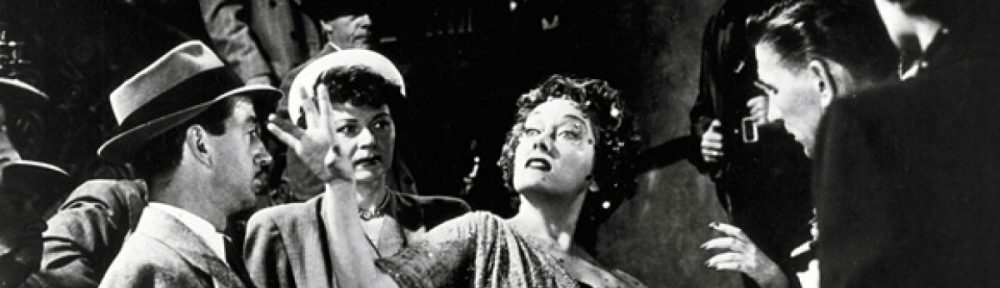
Scorsese’s legendary four-hour walk through his favorite American films is now available on YouTube,  in ten minute segments.

The real joy here are the many “minor” films that Scorsese suggests are worthy of attention.  Ida Lupino and  Sam Fuller, for example,  have received much deserved attention, but wait until you hear Scorsese’s incredibly informed case.

I’m telling you:  It is enormous fun watching a master filmmaker make his case for various films,  even if you don’t agree with his choices.

Here is the first episode:

“I no longer shall tinker with the machinery of death”

death penalty

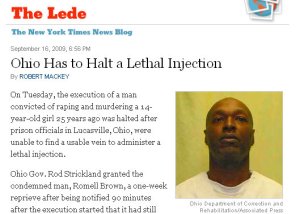
The Lede, the main New York Times news blog, is reporting that Ohio officials were forced to halt an execution by lethal injection when — 90 minutes after it started — technicians were  unable to find a usable vein. The description of the episode is horrifying, with the condemned reported to have tried to help the executioners find a vein.

As a death penalty opponent in Ohio said today:“The sentence is death, not torture plus death.”

This will almost certainly reignite the question of whether lethal injection does or does not constitute cruel and unusual punishment.

My objections go deeper, and relate to whether there is any way a death penalty can be fairly applied.  I think it cannot, and I would share with you one of the most eloquent paragraphs I have ever read,   an excerpt from Harry Blackmun’s dissent in Callin v. James (1994) . Blackmun argues that a fair death penalty is not possible:

From this day forward, I no longer shall tinker with the machinery of death. For more than 20 years I have endeavored…to develop…rules that would lend more than the mere appearance of fairness to the death penalty endeavor…Rather than continue to coddle the court’s delusion that the desired level of fairness has been achieved…I feel…obligated simply to concede that the death penalty experiment has failed. It is virtually self-evident to me now that no combination of procedural rules or substantive regulations ever can save the death penalty from its inherent constitutional deficiencies… Perhaps one day this court will develop procedural rules or verbal formulas that actually will provide consistency, fairness and reliability in a capital-sentencing scheme. I am not optimistic that such a day will come. I am more optimistic, though, that this court eventually will conclude that the effort to eliminate arbitrariness while preserving fairness ‘in the infliction of [death] is so plainly doomed to failure that it and the death penalty must be abandoned altogether.’ (Godfrey v. Georgia, 1980) I may not live to see that day, but I have faith that eventually it will arrive. The path the court has chosen lessen us all.”

Painting, Photograph, Synthesis, or Mutation?

Today, courtesy of Andrew Sullivan’s blog “The Daily Dish,” we are treated to the work of  master retoucher/airbrusher/painter Dru Blair.

I make no comment about the aesthetics or larger significance of the work,  or why it was an important artistic exercise ,  but admit I am stunned at the astounding technical accomplishment of being able to paint a portrait that cannot be distinguished from a photograph.

It also raises yet again the question that has haunted us from antiquity:  What is real? Who decides?

After seeing Blair’s work,  Ill be darned if I know.

Tell you something else: It also raises the interesting question of exactly what a pixel is!

Hard Times Come Again No More

Sometimes songs of grief are so fully human that they are, in their own way, joyful.

The pain can be intense, but these songs also celebrate that we have the capacity, the gift, of feeling loss as fully we do.

That’s how this beautiful, mournful song by Stephen Foster makes me feel. Sung by the wonderful McGarrigles.

Subprimed, a film by Sarah Friedland, Kahil Shkymba, and Joy Nayo Simmons

subprimed photo

There’s joy in Mudville today.

A film, “Subprimed,”  made in our MFA program at Hunter College by students Sarah Friedland, Kahil Shkymba, and Joy Nayo Simmons, under the supervision of Professors Kelly Anderson and Tom Angotti,  is the subject of Jim Dwyer’s column in the New York Times, “Student Filmmakers, Not Ceasing or Desisting.”

Check out the column and read about just what this subprime crisis means for real people, living real lives on the edge, who had a dream of owning a house.  And take a look at those who sought to exploit those dreams, one of whom, Mr. Makhani, is filmed offering the compassionate observation that “If the client is stupid, that’s not my problem…We’re not going to have classes to teach people how to read.”

Here are some clips from this work in progress.

Ah, just knowing that those who would hurt and exploit others are feeling some agita this morning.

The Guts To Be Proudly and Openly Nutty

And we thought that fairness, open-mindedness, civility, respect and plain decency were in decline.

How could we have been so blind?

Especially when we have these parents in Texas taking such a courageous stand against the immorality and decadence and socialism of the Obama administration.

I mean, this takes guts. 

The rest of us may sit here, paralyzed by cowardly fairness and respect for the presidency,  constrained by old-fashioned values like civility and decency.  But here’s a group of gutsy people apparently feeling no such constraints; proud to trumpet their astounding lack of even the most minimal decency.

The scariest thing is that they almost certainly have no idea how relentlessly foolish they look,  these self-proclaimed “values-voters”  busy imparting  “values” to their kids.

A Story of Life Inside a Hospital During Hurricane Katrina: Bravo to Pro Publica and The New York Times

katrina hospital

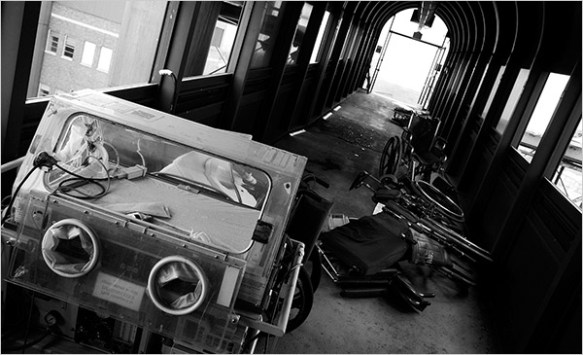
A truly ground-breaking news story appeared in the Times this weekend. Done in cooperation with the non-profit nvestigative journalism group Pro Publica, and reported by A.C. Thompson and Sheri Fink, the piece describes the frenzied and painful struggle inside of a New Orleans hospital during Katrina as staff dealt with seriously ill patients.

One of the most amazing pieces of journalism about catastrophe I have ever read. And so painful to read that I had to struggle to finish it.

A must read.

Google Street View Meets Antonioni’s “Blowup” Meets Complete Strangeness

For several semesters my students and I have been discussing some of the possible odd occurences and discoveries that might be made possible by Google Street View.

Most of the time we spoke in hypotheticals.

I could never have thought of this hypothetical.