Stuck on No Country for Old Men

This happens every decade or so. I will see a film, and — for a whole host of reasons — get stuck on it.

On first viewing,  the story unfolds, crafted elegantly and with meticulous attention to story and character.  After that, when the basics of the story are no longer a mystery, one exquisite element after another is revealed with each viewing.

Sometimes it turns out that  the story was even more perfectly crafted than I thought. After all, great screen writing is not conspicuous and ingenious narrative structures don’t typically telegraph their arrival.

Sometimes the cinematography or the color pallette or production design is so sublime, so perfectly integrated with the narrative, that it begs to be appreciated again and again.

And sometimes the acting so perfectly serves a scene or a story or the development of a character that  individual scenes can be profitably watched again and again.

And so here I am, stuck on No Country for Old Men, the masterpiece by Joel and Ethan Coen.

As was the case with other films that have “trapped” me — their  film Fargo, Wim Wenders’ Paris, Texas, Coppolla’s Godfather trilogy, and Scorsese’s The Departed and Goodfellas ,  Fellini’s Amarcord — the first viewing was a total immersion in a coherent whole. I  was not thinking about its elements. I was living the work.  Nothing can recreate that initial thrill of reveling in a complete work that is too carefully assembled to be seen as fragments.

But then the puzzle pieces begin to reveal themselves. And I am stuck.

A terrifying scene with Javier Bardem and Gene Jones. Lonely highways and cheap motels, photgraphed by the brilliant Roger Deakins, the dark night frequently punctuated by the blinding brightness of neon signs or oncoming headlights.  A haunting, gravelly narration by Tommy Lee Jones.  Craig Berkey’s sound design, a breathtaking symphony of creaking doors, wind, grunts, and scratches.  An almost unbearable sense of foreboding. And as much sadistic and cruel menace as the Coens have ever put in one film.

Yup, I’m stuck. And it is absolutely hypnotic.

“They that go down to the sea in ships:” President Barack Obama at Cape Coast Ghana, July 11, 2009

Tomorrow President Obama will visit the Cape Coast Castle in Ghana. The castle was a major departure point for Africans sold into slavery. This was where the horrors of the middle passage began.

My son, who was in the Peace Corps in West Africa at the time, took me to the Cape Coast castle in 2005.

The castle, as you can see in my picture,  is actually a very peaceful and beautiful place. I remember visitors approaching the entrance quietly. But the quiet was temporary. Because as the guide described the atrocities that took place in each tunnel, each crevice, it was impossible not to imagine the terrified voices and the anguished moaning.

100_1827

Yes, moaning. I thought I heard moaning. Then, we descended into the bowels of the underground prison, and heard stories of parents and children being violently separated.

Finally we reached the exit that led directly to the gangplanks of thousands of slave ships, the exit where millions faced either actual death on the ocean journey or survival in slavery that became what sociologists like Orlando Paterson call “social death.”

Today there are still boats at this exit, hundreds in fact. But they are the small and colorful ships of Ghanaian fishermen, and I will never forget the expanse of humanity that I saw as I walked out into the sunshine. Expecting more sadness, I saw only vitality, and I devoured the extraordinary sights and sounds of the life that now occupied what had been a place of such pain.

100_1872_edited

They that go down to the sea in ships, that do business in great waters; These see the works of the LORD, and his wonders in the deep. For he commandeth, and raiseth the stormy wind, which lifteth up the waves thereof. They mount up to the heaven, they go down again to the depths: their soul is melted because of trouble.   Psalm 107.

To Me He’ll Always Be Wade Gustafson

harve-presnell1

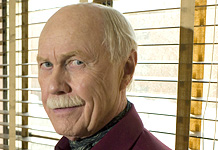
Harve Presnell died on Tuesday.

Harve was one of the great leading men in musical theatre and musical films.  But thanks to Ethan and Joel Coen,  late in his career he was cast as William H. Macy’s father-in-law,  Wade Gustafson,  in the film Fargo.

His performance was as remarkable as the film. And the scenes he did with Macy were classics.

               JERRY 

               Well, you know Stan'll say no
               dice.  That's why you pay him.
               I'm asking you here, Wade.  This
               could work out real good for me
               and Jean and Scotty -

               WADE

               Jean and Scott never have to worry

The Day I Met Michael Jackson

No, I didn’t meet him.

But Jack Shafer’s piece in Slate is a superb and deserving takedown of all the journalists who seem obligated to recount their  30 seconds with Jackson.