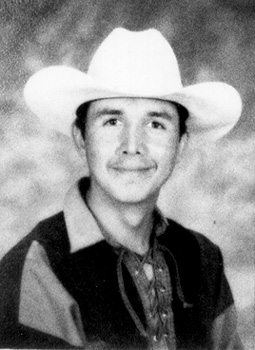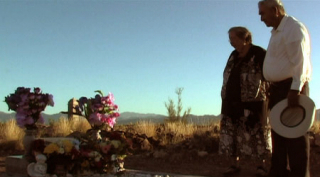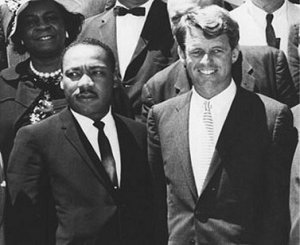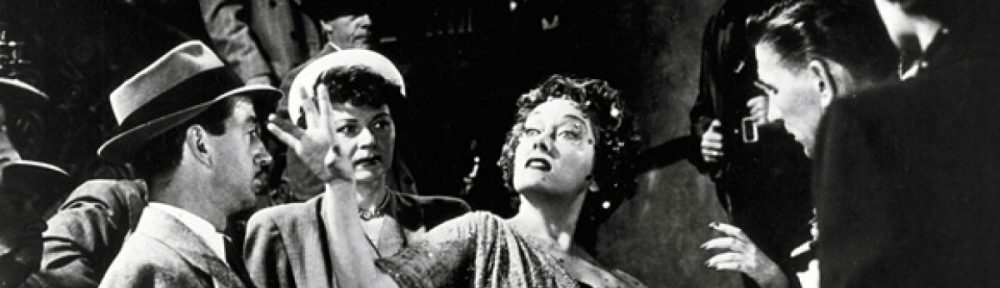
A Debt Repaid to an Extraordinary Man and Filmmaker: Kent Mackenzie’s “The Exiles”

I have a debt to repay.

In 1969, my senior year at South Hills High School in West Covina, California, I was introduced to a filmmaker named Kent Mackenzie. He was interviewing kids at my high school for a feature documentary about the struggles of being an adolescent. He asked me to be in it, but I was going off to college and couldn’t do it.

But Kent saw I was fascinated by film and he invited me to see his studio. If my memory serves me right, he worked out of Churchill Films in LA.  He  gave me the equivalent of a master class, and then showed me a film that he had made while a student at USC. It was called The Exiles. After that, he had me down a few more times and introduced me to the world of documentary film.  I have never made films, but I have lived and breathed and studied them for years.

It was one of the most unselfish things anyone has ever done for me. He shared his wisdom, but what remains unforgettable was his love for his craft. 

I never saw him again. Story over.

No, story not over. Not by a long shot.

Kent died, much too young, several years later.  But I was haunted by the film’s characters for years — poor American Indians living in the small Los Angeles enclave of Bunker Hill who had come from impoverished reservations in the late 1950s. These were people neither here nor there, people at the margins of a society that didn’t even want to know what to do with exiles.  And LA was a city happily ridding itself of any unsightly enclaves it could find.   Kent’s exiles would be gone in several years.  But not before he told their story.

The Exiles is a brilliant combination of spontaneous verité and staged scenes.  It is rendered in a black and white film that had more colors and hues and shadows than Technicolor. What I didn’t know then was that this guy who had been so warm and helpful was also a master cinematographer. And that he filmed it with a slew of other master cinematographers.

Almost 40 years passed.

And then, in 2003, Thom Andersen’s wonderful documentary “Los Angeles Plays Itself” was released. It included scenes from The Exiles.  Milestone Films, supported by producers Sherman Alexie and Charles Burnett (filmmaker of another quiet classic, Killer of Sheep), and in cooperation with USC’s film archivist Valarie Schwan, brought the film to preservationist Ross Lipman at the UCLA Film & Television Archive.

The result was that the restored version of The Exiles was released over 10 years ago (2008) to worldwide acclaim. Milestone Films is itself a gift to the film community, and its founders Dennis Doros and Amy Heller were also responsible for the release of Burnett’s Killer of Sheep. (Definitely check out their catalogue.)
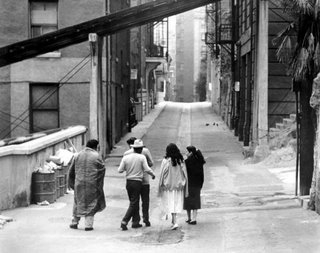
The critical reaction was immediate:

The restoration and long-delayed commercial release of ‘THE EXILES,’ a 1961 film about a largely forgotten corner of that deceptively bright city, is nothing less than a welcome act of defiant remembrance… A beautifully photographed slice of down-and-almost-out life, a near-heavenly vision of a near-hell that Mr. Mackenzie situated at the juncture of nonfiction and fiction. He tapped into the despair of this obscured world while also making room for the poetry and derelict beauty of its dilapidated buildings, neon signs, peeling walls and downcast faces.”

—MANOHLA DARGIS, NEW YORK TIMES

“‘THE EXILES’ surely deserves a place in the history of American independents alongside  John Cassavettes’  ‘Shadows,’  but its cautious depiction of a situation rarely reported even today gives it a permanence that has held up over the decades.”

INDIEWIRE

In later years, film and literature would be packed with the themes of exile, of immigration, of emigration, of being lost in someone else’s world. But this was a time in Southern Calfornia when none of that messiness would be allowed to get in the way of a “Leave It To Beaver” and “Wonder Years” world. How could it when we were so busy tearing down the Chicano neighborhood of Chavez Ravine to build a baseball stadium?  

When suburbia was still ringed by shanty towns housing poor immigrant farm workers.  When the only ethnic celebrated in textbooks was Fr. Junipero Serra, whose claim to fame was the Calfornia missions, the conversion of thousands of Native Americans, and the introduction of disease and repressive policies responsible for the deaths of hundreds of thousands of American Indians.

Out of sight, out of mind. The Southern California of Art Linkletter’s House Party couldn’t have cared less.

But now we can see the world Kent saw when others wouldn’t.

I hope you do.
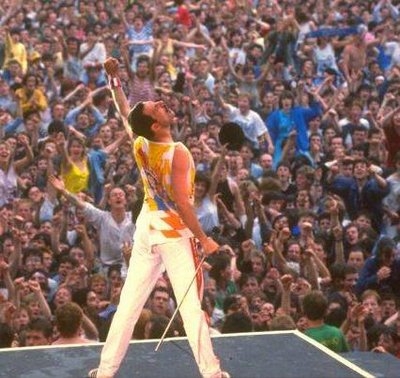
Happy 62nd Birthday, Freddy Mercury!

Was it the edgiest music around?

Not really.  There was a place for all that — Jimi Hendrix, Cream, Stones  Joplin, and, of course, the Lizard King — but today I have been thinking about of one of the greatest rock and roll singers ever. Freddy Mercury could walk into the world’s biggest venues — the Wembleys and countless other stadiums — and take ownership, assume command. Concerts in front of 100,000 people became intimate get-togethers for a guy who could be in his element in front of 325,000 people.

Stadium rock is easy to make fun of. Not everyone can command the space. Music is lost amidst the mayhem. I once saw the Beatles do it, but the music was lost in the screams.

Freddy Mercury turned stadium rock into high art. He had a soaring voice. He was backed by incredible musicians. He was flamboyant and joyous. He loved being a “front man.”

And right in the middle of it all, he was gone.

This will always be one of my favorite performances. 

July 13, 1985,  Live Aid, Wembley Stadium, London, England. 

Pregnancy and the Presidency: Some Words of Wisdom and Compassion from Bob Steele of the Poynter Institute

I have been sitting here trying to tease out all of the conflicting feelings I have about the frenzy over the pregnancy of Governor Palin’s daughter. 

It reminded me of an op-ed piece I wrote for the LA Times early in the Bush administration urging that the Bush daughters be allowed to grow up and screw up with a minimum of media scrutiny. Having done my share of screwing-up, I guess I have alwasy felt a special kinship with young people who find themselves needing need some slack rather than condemnation. 

My opinion about their Dad as President is still the same (another topic for another time) but I have learned over the years that, as a Dad, I have a real weak spot for kids thrown into the lion’s pit because of the actions of their parents. 

Believe me. I am well aware of all the well-reasoned arguments about how a candidate’s personal life can and does reveal fundamental characteristics that might be relevant to how they will perform in the public sphere.

But I still can’t get past the fact that underneath all the debate, all the political combat, is a pregnant teen trying to make sense of her life and her future.

I’m still ambivalent, but I want to share a very thoughtful, compassionate and well-written piece by Bob Steele, who writes about journalism ethics for the Poynter Institue.

Bob Steele of The Poynter Institute

Bob Steele of The Poynter Institute

It comes as close as anything I have read to getting a handle on why the focus on Bristol Palin has me so confused.  We do need all the information we can get to make reasoned political choices. We need to know when someone’s public positions might be at odds with the way they live their own life. 

But a 17 year-old girl also has a right to make mistakes and learn and grow. Some of you may feel less inclined to empathy. I understand. I also hold very strong political views. And they happen not to include support for her mother’s candidacy or political views.  But I also agree with Bob Steele when he writes:

“Bristol Palin is Sarah Palin’s daughter. But she is also, in some ways, our daughter, too.”

Does This Rise to the Level of an Urgent News Bulletin?

Some of you who know about my ongoing love/hate relationship with 24 hour cable news (sadly, more disgust and disappointment than anything else) might assume that I ask the following question with my mind already made up.

Not true. I am really curious about what you think.

It is now September 2, 2008 at 4:06PM. I just received the news bulletin below. I subscribe to the breaking news bulletins of every major network and cable news source. Do you think  this rises to the “urgent” level of newsworthiness? No other network has distributed it.

The question is not whether this is serious. Of course it is.

How, though, should we define “breaking news?” Might this have actually been a “bulletin” with the primary purpose of increasing the television audience?

Update: The plane landed safely in the last 15 minutes, about ten minutes after I received the bulletin.

—–Original Message—–
From: BREAKING NEWS [mailto:breakingnews@foxnews.com]
Sent: Tuesday, September 02, 2008 3:50 PM
To: BREAKINGNEWS Subscribers
Subject: FNC Alert

AA FLIGHT WITH 136 PEOPLE ON BOARD CIRCLING LAX WITH BLOWN TIRE: WATCH LIVE

**Watch FOX News Channel or go to http://foxnews.com

Katrina, and Now Gustav: Remembering the “Looters” and Those Who “Found Food”

I just figured out why I can’t go to sleep.

With Hurricane Gustav bearing down on the coast of Louisiana, I have been thinking a lot about Hurricane Katrina and its aftermath. We actually had students at Hunter College in the fall semester of 2005 who were escaping the horror of New Orleans and needed a school to attend for one or two semesters. I often wonder what happened to them.

And sometimes I still flash on the news footage of bodies floating through the streets of New Orleans, human detritus of a social system that can decorate a New York skyline with dramatic skyscrapers but can’t fix a levee.

But I will always be haunted by some of the images and captions in the Katrina coverage that revealed some of our most insidious attitudes about race and class.

Do you remember how some people were described by major news organizations as “looters” and others as having “found food.” Do you remember exactly who were called “looters” and who “found food?”

Sometimes our blindness is astounding: We are thrilled to celebrate major victories against racism, sexism, homophobia and other hates. And then, full of self-congratulation for all the progress we have made,  we demonize people struggling to survive and turn others into tenacious heroes.

Shameful.

In Celebration of a System That Allows Both Disgusting Films and a Disgusted Audience

Yesterday’s  Washington Post includes a very thoughtful op-ed piece by Tim Shriver on the controversy surrounding Tropic Thunder. I strongly recommend it.

But first, allow me a quick word on free speech.

I certainly have made my disgust with Tropic Thunder well known. I have never written a blog post that generated  as much attention.

I do, though, want to make clear that I am pretty much an absolutist when it comes to free expression.  Yes, this kind of unrestricted expression can get terribly messy, even hurtful.

It allows people who I think are being cruel to be that cruel and more. It allows people to vote with their pocketbooks and either see or not see anything they want.   And yes, it allows DreamWorks to take the temperature of public attitudes and focus groups and to market the film with any tag-line that they choose, however disgusting I may find it.

As I said in the post below: “I actually appreciate that we live in a country that grants artists the creative freedom to make audiences sick.”

But here is where the rubber meets the road:

This same wonderfully chaotic free market  also gives me the right to do everything permitted under constitutional law — including supporting boycotts, email campaigns, blogs, demonstrations — to extract a price from DreamWorks for saying what it is that I don’t like. If my efforts cause them some problems, I am happy. If those who ridicule the disabled are brought out of the shadows, I am also happy. If I don’t succeed,  I may wish I had done better, I may even be bitter that cruelty prevailed, but that is a price I will gladly pay. I am not restraining  their free speech, nor would I want to. I am exercising mine.

I know this will be a tough pill for me to swallow. But if they still choose to go ahead with the astoundingly hurtful use of the word “retard,”  I will  — along with my pain and anger — still celebrate the system that permits both the making of a dumb film and my disgust with it.

I have spent time in authoritarian dictatorships. I have quickly shoved a camera under a taxi seat so secret police would not discover it at a road block. I have watched that camera slip out from under the seat as the police approached.

And I’ll take the rough and tumble — even the pain — of free expression any day.

Bravo DreamWorks! What Courage It Must Have Taken to Make Fun of “Retards”

Whenever I despair that true courage — the willingness to take on the powerful and the intimidating — is nowhere to be found, I have a couple of weeks like these.

Last month it was the courageous Michael Savage.

Where, after all, can you find a man willing to fearlessly ridicule autistic kids and show the moral fiber it takes to make fun of the defenseless and the disabled? Others may hide behind such gutless concepts as compassion, empathy, and – YUCK!! – love, but at least Mike wasn’t afraid to be proudly and shamelessly cruel.

Now that takes guts.

I think Savage may have inspired the most recent courageous person of the week.

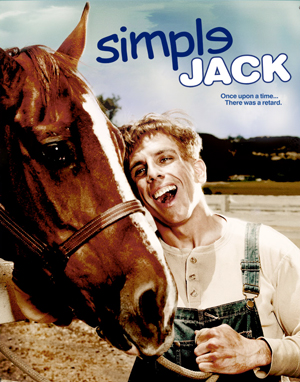
Today we salute the compassion of Stacey Snider, a senior executive at DreamWorks, who has stood firm against those who would criticize “Tropic Thunder,” a film from Ben Stiller that has used its right to free expression to nail those annoying little kids that the film bravely calls “retards.” Check out the tag-line on the poster: “Once upon a time…there was a retard.”


That’s right. While others might have knuckled under and admitted they had done something unspeakably hurtful, Ms. Snider has honored herself and her industry by announcing that she is “proud of the movie. It is hysterically funny. I do think it’s got its heart in the right place.”

And not one to be intimidated by the forces of compassion, she defends the film’s depiction of disabilities by suggesting that “The star-studdedness of it, and the absolute playability of it, trumps it all.”

That’s right: Miss Snider asks us to accept this profound hurt because of the film’s “star-studdedness,” which “trumps it all.” It might be disgusting, but at least it is stars being disgusting.

Just out of curiosity, Ms. Snider, whose concerns and hurts are trumped by all these stars? The hundreds of thousands of children who already get called “retard” at school, on playgrounds, in shopping malls? The kids who get stared at? The parents who struggle to protect and defend those kids from emotional pain?

Here’s what really kills me. Do I think that any production executive or Ben Stiller sat down and thought: How can we make fun of kids with cognitive disabilities? How can we cause their parents unnecessary pain? How can I make sure the word “retard” echoes across the cultural landscape?

Of course not. It is worse than that. Much worse.

Because what this whole shameful episode makes clear is that the entire promotional campaign – the posters, the web sites, the trailers, everything – made it through the entire DreamWorks production and promotion process without anyone, not one person , ever stopping to ask themselves: Sure we can say anything we want. Sure we can use the word “retard.” But do we want to? Should we? Is it right? Is it kind? Who would we hurt?

Nobody asked. Nobody asked.

Nobody gave two seconds thought to the possibility that someone might be hurt; that some kid might come home and ask why another kid called them a “retard” after seeing a movie made by Ms. Snider’s company.

I wish I was pure. But there is not a soul on earth to whom I would confess all the disgusting nonsense I have laughed at. I actually appreciate that we live in a society that grants artists the creative freedom to make an audience sick.

But never, ever — if you claim to have even a minimum of guts or decency — mess with people who cannot speak back.

Smacked in the Head By a Surfboard: I’m Taking a Break for the Weekend

Enough serious stuff.

Let me get this over with: Yes I grew up in Southern California. Yes I loved the Beach Boys. And yes,  I was a serious skateboarder until my freshman year of high school.

I also surfed. Once. I stood up on the board once. Briefly.

Then it came out of the waves like a torpedo and hit me in the head. No more surfing.

But here are the Beach Boys with Surfin’ USA.   A rip-off of Chuck Berry’s Sweet Little Sixteen. But an anthem even to a wannabe who could only claim one smack in the head. Truly the essence of cool in 1963 Southern California.

Did you know that we skateboarders also had an anthem?  It was called Sidewalk Surfin’ by Jan and Dean. Any of my incoming students this fall are welcome to ask to see the scar on my left forearm from a truly  nasty fall on my friend Ricky’s long, smooth, concrete driveway.

 Jan and Dean

Back next week.

An Answer from Home Depot I Really Appreciate: In Fact, I am Going to Buy Some Mulch, Batteries, and a Wrench Right Now

 I’m satisfied.

As I suspected, my favorite home supply store — Home Depot —  did have some ads on Michael Savage’s show of which they were unaware. And Home Depot’s connection to the show is over. I just got this gracious and straightforward response from Sarah at Home Depot’s corporate communications department:

Hi Steve – Sarah here again. Yes, we have since learned that a couple stations ran our ads by accident in time slots we did not authorize. Our customers have done a great job keeping us informed where they heard them run, right now we’re aware of NYC and Detroit. If you or your readers hear our ad during this program on any other station/city, please let me know. Also, I provided an email address where I could be contacted before, perhaps you did not get it? I’ll include it right in my message this time.

information@homedepot.com

Thanks, Sarah. And thanks, Home Depot.

I appreciate this. I really do.

I rarely fume as ferociously as I have about Michael Savage’s comments. And I do support a boycott of current Savage advertisers who do not sever their relationship.

But I am not a jerk. And part of any boycott, or possible boycott, is to show gratitude to any entity that acts in good faith. And not only is Home Depot off my list, but I am going over to the really well-managed Home Depot #6903 right now for some mulch, batteries,  and a wrench.

And just a word to Home Depot that I hope will not sound arrogant: You lost almost two valuable days in a crowded and messy and fast-moving media environment during which you could have quickly confirmed facts, fessed up to any unintended errors, set up a toll-free number for questions, and clearly stated your revulsion at Savage’s remarks.

But I have to go: So help me, I love to buy tools and garden supplies. Not that I always come home and actually use them!

More on the “Courage” of a Disability-Ridiculing Talk-Show Host: Michael Savage Urges Autistic Kids to “Stop Acting Like a Putz”

This is just too cool.

Professors of media, journalism or communication are almost never treated to examples of media idiocy as juicy as Michael Savage’s most recent comments on autism. Unfortunately for us, most media personalities often show just enough coherence to avoid being placed in the “stupid beyond words” category. We can only be grateful that Savage’s courageous assault on disabled children has provided us with a perfect example.

I ask you: What kind of courage and strength of conviction must it have taken for him to speak truth to power with these brilliant observations about autistic children?

I know that some people might argue that by sharing the audio of his mind-bogglingly stupid rant, I am extending his reach. I simply think that, unless you hear his words with all the bile included, you might not fully appreciate how someone with such a tenuous hold on sanity continues on the air.

“What do you mean they scream and they’re silent? They don’t have a father around to tell them, `Don’t act like a moron. You’ll get nowhere in life. Stop acting like a putz. Straighten up. Act like a man. Don’t sit there crying and screaming, you idiot.'”

So here’s the latest:

The completely predictable free speech argument is now being raised by some of Savage’s supporters, or whatever you call someone who listens to him. This reveals a profound misunderstanding of the first amendment that is also seen all across the ideological spectrum.

So let’s get it straight: Savage certainly has the right to say anything he wants and to salivate as much as he wants. That is why I never objected to any of the right-wing boycotts proposed by sundry loony-tunes. It really was Jerry Falwell’s right to express deep and grave concern that the purple Teletubby was actually gay. The man was afraid of being hit on by a stuffed animal and we needed to know that!

But no one in a commercial system of broadcasting is entitled to a permanent, sponsored platform.

Savage: You do get to say what you want. Sponsors, though, get to decide if and when an association with you becomes more of a liability than an asset. AFLAC, as they did yesterday when they jettisoned you, gets to decide that – however large your audience – they will pay more of a price by an affiliation with you. Other sponsors get the same choice. If not enough remain to make your show profitable, you still get to express your views. But not on their dime! Or on their radio network.

This is what kills me about you supposed free-market capitalists: You love a free-market until that free market bites you in the behind. Then you weep about your rights to free speech. Or you want to be able to rob sub-prime borrowers without annoying government interference like taxes, and when you screw up miserably, you are on your pathetic hands and knees begging for a bailout.

A free market and free expression means you can rant without restriction and others can do everything possible to get you off the air. Don’t worry, Mike: If enough sponsors choose to stick with a guy like you who is gutsy enough to ridicule disabled kids, you’ll stay on the air. If not, you are welcome to walk outside and start to babble.

One last thing: You have to see the carefully worded statement on Savage’s web site. One day he is calling autistic kids “idiots” and telling them not to “act like morons” and the next he is saying that “My comments about autism were meant to boldly awaken parents and children to the medical community’s attempt to label too many children or adults as “autistic.”

What canned, hack-written, C.Y.A. nonsense.

I beg you, Savage: Spare us the official “I better be sane and backtrack so my sponsors don’t head for the door” statement. These statements are hilarious in their desperation, illustrating how idiocy and cruelty only works on trash-radio until the sponsors get antsy. Then it’s time for a quick conversion to sanity. If you are going to be astoundingly ignorant, Mike, at least do it proudly and openly.

And Mike: Your attempted last minute conversion to sanity is truly a laugh riot. Just know that we can see through to the phoniness and transparent desperation designed to save the sponsors who finally know the truth: They have been paying to reach an audience who like hearing a nut make fun of disabled kids.

We can only hope that none of the sponsors buy it.


Oh, by the way, here is a list – courtesy of Greg Reich – of some of the sponsors who advertised on Savage’s July 18th broadcast. Greg’s blog, Greg’s Take, has an excellent post on his experience raising a daughter with autism.

Digital Media Inc., U.S.A.

Nevada State Corporate Network, Inc.

Roger Schlesinger, the Mortgage Minute Guy

Effectur

Geico

Home Depot

Wachovia

Gold Bond

FreshStart America

Heritage Foundation

Debt Consultants of America

DirectBuy

WebEx

The Trials of Darryl Hunt

Sometime during the recent academic year, a student handed me a film being promoted at an public relations agency where he was working.  After I watched it and was left almost paralyzed by rage at a justice system completely out of control,  I  promptly forgot to tell anyone about it.

But I just saw  that Annie Sundberg and Ricki Stern’s The Trials of Darryl Hunt is now available from Netflix and wanted you to know about it.

Nobody quarrels anymore with the fact that innocent people are wrongly convicted. Prosecutors know it. Defense lawyers definitely know it. And hundreds of prisoners exonerated by The Inncocence Project stand as the ultimate proof of persistent and pervasive injustice. 

Having said that, I’m not sure I have ever seen a more egregious example of gross prosecutorial misconduct  than  the case of Darryl Hunt.

And while I am not one who believes that suffering is necessarily redemptive or ennobling, it is nothing less than thrilling to watch the young Darryl Hunt evolve into a truly great man, a hero who will not be deterred in his quest for truth and justice. 

There are so many horrifying twists and turns that I will resist telling you any more. But if you are intrigued by the thought of a true, living nightmare rendered brilliantly in a documentary film — a Non-CSI take on what happens when race collides with astoundingly ruthless prosecutors —  you must see The Trials of Darryl Hunt.  

MSNBC and Prison Reality Programming:” Or How Did “Lockup Raw” Get On a News Channel?

 My love-hate relationship with 24 hour cable news continues.

I’ve admitted it before: None of my  criticism of 24 hour cable news – including what I have to say here – can hide a simple fact: When all hell breaks loose, or when an event occurs that is important to me, I am tuned in for the wall to wall coverage like any other news-loony.

The problem with MSNBC, CNN, and FOX is that they are responsible for news holes too immense to fill and too costly to fill with in-depth reporting. So they each rely on all sorts of  filler — talking heads, re-runs of regular network magazine shows, and reality shows from independent producers – to fill the schedule. Of course, this is a tacit admission that they are simply unwilling to spend the resources required to fill the hole with serious news or analysis.

On MSNBC, for example, we are treated to such unrepentant claptrap as Lockup Raw and Caught on Camera, and, reaching even deeper into the cultural garbage bin, re-runs of To Catch a Predator.

Believe me; I am sure that they would rather fill the hole with enough truly cataclysmic events that they could keep “BREAKING NEWS” flashing on the bottom of the screen permanently. The problem is that, by mercilessly hyping any remotely interesting news story, they have raised the catastrophe bar so high that a war between India and Pakistan might not even make the cut unless one of the countries loaded up the nukes.

OK, so I exaggerate.

But barring a world that doesn’t come apart 24 hours a day, they each look to trashy programming as filler.

And this is where “Prison-P–n” comes in. One of MSNBC’s most popular fillers is Lockup Raw, which offers hours of riots and fights inside prisons backed by a soundtrack of screaming and yelling and all-around mayhem. We learn nothing about the causes of prison conditions.

But we do learn the profound and shocking lesson that inmates occasionally beat the hell out of each other. Brilliant. And deep. Very deep.

Normally I wouldn’t waste keyboard strokes about “Prison P–n” programming, but last week I heard a feature on NPR’s All Things Considered about the inhuman conditions in California prisons, including crowding, disease, and sexual assault. As I listened, I was struck even more how garbage like Lockup Raw, with all its screaming and bleeding, is too mindless to offer even a slightly provocative insight about why prisons are the way they are.

They keep it quite simple: Prisoners are animals. Prisons are zoos.

Please check out the extraordinary report by Laura Sullivan on overcrowding at San Quentin that was broadcast July 7th on All Things Considered. No video. No blood. No prison p–n. only a brilliant and chilling story about what happens when two inmates occupy a cell built for one; when the barbaric view of the human being as animal is formalized in a state’s public policy and practice.

I’m in a Panic: The Wire Really is Over


I woke up in a panic this morning.


You know all that hype last spring about the end of HBO’s The Wire?


It was real.


It’s over.


The characters are gone.


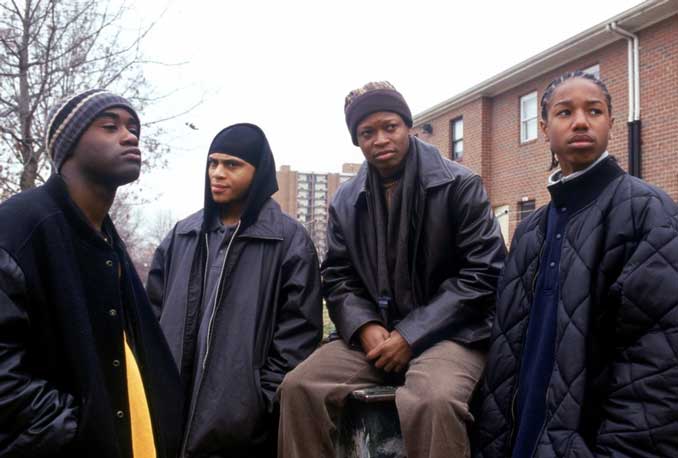
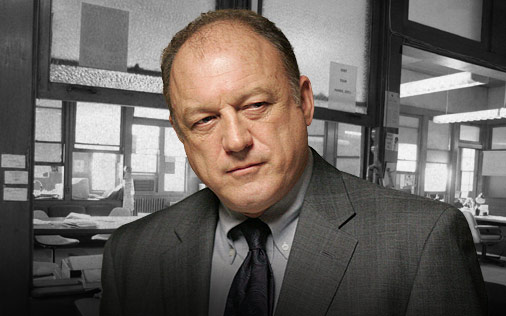
Omar, Rawls, Bunk, Rhonda, Valchek, Beadie, Jimmy, Carver, Herc, Kima, Daniels, Freamon, Prop Joe, Marlo, Stringer Bell, Butchie, Brother Mouzone, Avon, Cutty, Levy, Bubbs, Snoop, D’Angelo, Tommy, Mayor Royce, Clay Davis, Frank Sobotka, The Greek, Namond, Michael, Randy, Prez, Bunny Colvin, Duquan.


Gone.


This is horrible.


Where do characters go? 

Johnny Depp: Master of His Craft

Did you see Johnny Depp in “Sweeney Todd:The Demon Barber of Fleet Street”?

The reason I ask is that, while I found the whole gory spectacle to be lusciously dark and haunting, the real shocker was Johnny Depp’s astounding vocal performance. Really a revelation.

So often the high quality of singing in a filmed musical is distracting. The songs are more star-turns than integrated elements of a story. At worst, they are so operatically overwrought that they detract from whatever story might be developing. My favorite example of conspicuously inappropriate singing in a film was Rossano Brazzi’s slightly ridiculous rendition of Some Enchanted Evening in Josh Logan’s film “South Pacific” (1958).

I still am not sure how to describe Johnny Depp’s epic accomplishment. I know he was singing. But he was also doing something very different, using music and an idiosyncratic voice to express the anguish of a tortured soul. This was the “singing” of an extraordinary actor, for whom storytelling trumped vocal pyrotechnics.

It reminded me of a sad funeral I had to attend many years ago for a young man accidentally killed in gang-related crossfire. I knew his mother, and her wailing during the service remains the most haunting sound I have ever heard. Her convulsive tears seemed to be coming from a corner of the soul where only the most painful grief resides.

Johnny Depp seemed to sing from this same place.

When I left the theatre, I thought: This was extraordinary. But the purists, the opera crowd, will never appreciate it.

So imagine how I felt a few months back when read a review of Depp’s performance by New York Times music critic Anthony Tommasini. I was stunned. Tommasini, whose usual beat is opera, was stunned by the quality of Depp’s performance. This is an excerpt from the review:

“In Mr. Depp’s portrayal, words come first in the shaping of a phrase. Expression, nuance, intention and controlled intensity matter more than vocal richness and sustaining power. These principles of vocal artistry matter just as much onstage, as the best operatic artists understand. But too many opera singers are overly focused on making beautiful sounds and sending notes soaring at the expense of crisp diction and textual clarity. They could learn something from Mr. Depp’s verbally dynamic singing… I don’t mean to suggest that his vocal performance is merely a savvy kind of sung speech. There is musical distinction in his work.”

Go directly to your NETFLIX queue.

My Ten Favorite Films


Ten best lists of films are dumb. They force dumb choices and add almost nothing to serious discussion and criticism.


Big deal.


I love them. I love reading them. I love making them. And here is how I go about it.


At any given time I always have a list of contenders. If a film has any claim whatsoever on ever making it into my top ten, it goes on the list. Then, one by one, I cross out films until there are only ten left. These are the films that I most enjoyed watching, not those that I would necessarily rank as the highest expressions of the craft. Having said that, it is almost certainly the case that my contenders are overwhelmingly well crafted. But to make my top 10, I have to viscerally and emotionally love the experience of watching the film.


Important: “Love” does not mean that I found the experience pleasant, just that I reveled in the pleasure of watching a story told with narrative skill and total command of the formal elements of film.


The best example of a film that embodies all these confusing criteria is my favorite of them all, Krzysztof Kieslowski’s “Dekalog.”  I suppose you could say I enjoyed watching it, but if you have seen it you will understand why “enjoy” is perhaps not quite the most apt word for the experience. What, after all, do you say about a film in which one of the very best of the  sections (#1  I Am the Lord Your God) was so emotionally shattering that I have only watched it once and almost certainly will never be able to watch it again?


So here is the list as of today. If a film has a number, it made the top ten. The reasons why a film didn’t make the top ten are varied and, most often, beyond rational explanation. My choices are infinitely more visceral than cerebral.


By the way, I have a separate documentary list, which I will post soon. Salesman, although a documentary,  is a work of such poignancy and genius that it would make any list I create. 


I very much hope you might post your ten best lists and describe your agreements and your quarrels with mine. Perhaps you think that either an omission or inclusion of mine is unforgivable.


Let me know.


Mr. Smith Goes to Washington


1. Dekalog (1989) 


Au Revoir les Enfants


Shop on Main Street  (1965)


10. Midnight Cowboy


It’s a Wonderful Life


3. Jeux interdits


Smile


Atlantic City


Fargo


Das Boot


The General


The Swimmer  


7. Goodfellas


Paris, Texas


8. Rear Window


Shoah


Invaders from Mars


4. Salesman


Strangers on a Train


The Graduate


French Connection


2. Godfather 1/Godfather 2


9. Double Indemnity


Les Enfants du Paradis


Les Diaboliques


Psycho


Le Salaire de la peur


Hotel Terminus


5. Amarcord


6. Night and Fog


Happiness


The Third Man


M


The Marriage of Maria Braun


The Night in 1968 I Was Born: Public Broadcast Laboratory’s “Birth and Death”

My lifetime of interest in documentary film began sometime during the week of December 4, 1968.

I was 17 years old. The $12.5 million Ford Foundation experiment in public television and precursor to PBS, the Public Broadcast Laboratory, was starting its second and final season with a two hour cinema verite film by Arthur Barron and Gene Marner, “Birth and Death.” The concept was to follow the birth of a baby in the first hour and the death of a man in the second hour.

I have always felt like I was born that night. Neither childbirth nor death had yet become the openly discussed public events that they are now, and the film was a revelation.

Coming around the same time as “Salesman” by Albert and David Maysles, and a year before two incredible semesters at UCLA studying the history of documentary film with Professor Edgar Brokaw, it was the first time in my life that I saw the raw and emotionally jarring power of cinema verite documentary. Before that night I had no idea what was possible when a first-rate cinematographer, often working with a handheld camera, would use excruciatingly intimate close-ups and candid reaction shots to capture the inherent power of lived experience.

“Birth and Death”  (1968) is discussed and remembered far too seldom, and was very much an early, brief precursor to POV. The night of that broadcast began what became PBS’s proud history of showing the work of outstanding documentary filmmakers to national audiences. It was also the night on which, as a teenager typically oblivious to mortality, it first struck me at the deepest level that going to Viet Nam with the rest of my age cohort might mean that I would die.  And I remember thinking after seeing the Barron film: Dying means you stop breathing. Dying means darkness. Not good. Not good at all.

I thought of all those years tonight when I heard that Fred Wiseman’s film company, Zipporah, has gradually been releasing his extraordinary body of work on DVD. Wiseman, I only learned a year later in 1969 at UCLA, had — at the very same time as Barron’s “Birth and Death” — already begun his astounding body of verite work in 1967 with “Titicut Follies.”

I later saw most of that work, much of which was also broadcast on PBS. Check out the Zipporah site and catch up on some of the greatest verite film ever made. I have a personal favorite, “Near Death,” and I’m sure many of you have yours.

1967 – 1972.

An amazing time for cinema verite. An amazing time to be coming of age. And – for a 17 year old about to contend with the Viet Nam draft — an amazing time to realize that, sooner or later, for good or for bad, birth would eventually be followed by death.

Skewering Hypocrites and Liars With Civility: In Praise of Tim Russert


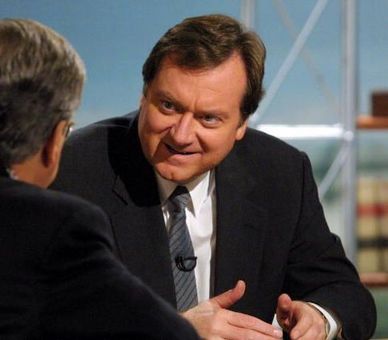
The last few days have been filled with tributes to NBC Chief Washington Correspondent  and host of Meet the Press Tim Russert.  


I have one to add.


In the fall of 2005, I left a senior administrative position in which one of my responsibilities was government and political relations. There were some years when politics was really in my blood, especially when there was an issue to be fought or a worthy project to be funded. There also were years when the trek back and forth to our state capital was excruciating. At least, because my “client” was public higher education, I always believed deeply in the inherent value of what I was selling. 


But then I lost it.  


Mostly, I became completely unable to tolerate a parallel universe in which a politician’s words and actions often simultaneously contained 1) an ostensibly noble, yet utterly phony, public rationale and 2) a more authentic, yet venal or self-serving, private rationale. I know. That’s politics. And it is a game. But enough was enough.


It was almost indescribably cathartic in those days to watch Tim Russert who – with infinite civility – would fillet those spinmeisters and phonies right down the middle. He always knew exactly what questions a guest wanted to avoid, issues on which they were vulnerable to charges of hypocrisy or excessive spinning. And he would ask them.


“Senator, why with all your public support and enthusiasm for the health care bill, were you absent on the day the vote took place? Why in two days did you make two speeches that offer completely contradictory views on the Iraq war? Why did you vote so enthusiastically and visibly for the Smith/Jones bill, yet then vote against every appropriation that would have made it a reality?”


And on and on.


No one cut to the chase with more decency.


We live in an age of salivating provocateurs, people like Bill O’Reilly and Michael Savage and Lou Dobbs,  who confuse rants and smarts. Completely unaware of how ridiculous they look, they get so lost in their infantile tantrums that — for all their histrionics – they miss the chance to really cut through to the truth.  They ask incendiary questions and get incendiary answers. They create a lot of heat, generate almost no light, and — while everyone is getting hot and bothered — no one notices that the hard questions, the nuanced questions, have not even been asked. 


Russert, on the other hand, never lost his civility. Yet he still could nail a sleazeball better than any of the loonies in the media shoutocracy. He knew that skewering was best accomplished by preparation, substance and civility, by asking precisely the right questions. The slippery and the ill-informed were unmasked before a national audience without any assault on their essential dignity as human beings. 


After Tim Russert, no journalist will ever be able to persuasively argue that getting to the truth requires that another human being be demeaned or berated. When Tim Russert’s questions led to your humiliation or the end of your political career, you had no one to blame but yourself.

Now All I Feel is Rage: “The Ballad of Esequiel Hernandez” Pt. 2


A few weeks ago I tried to describe the emotional impact of Kieran Fitzgerald’s “The Ballad of Esequiel Hernandez.” It’s been a long time since a documentary left me so incapacitated by grief. The first time was in the midst of violent anti-war protests against the Viet Nam war, in a room full of cynical boomers at the UCLA Film School, as we watched Albert and David Maysles’s “Salesman” and were reduced to sobbing.

“The Ballad of Esequiel Hernandez” is a superb example of a documentary that shrewdly reaches for the pain without pouring on the polemics. Only after delivering a blow to the heart does that pain slowly make way for rage about the larger social context in which Esequiel was killed.

Rage? That’s right. I’m no longer paralyzed.

Watching “The Ballad of Esequiel Hernandez” brought to mind every example of pathetically misguided criminal justice policies that have been adopted exclusively as public theatre, remedies designed to create elegant yet completely phony illusions of action.

Oh, I know that these “solutions” are sold to the public as the latest and greatest answers to public anxiety. And I know that a scared public is vulnerable to quickly adopting almost anything that looks tough.

It’s just that these “solutions” are so often scams, quick and dirty fixes proposed by some politician who knows that a politically successful policy will always trump an effective one.

And do we come up with some good ones! A mandatory sentencing law takes discretion away from judges, young men and women are imprisoned for life because they are present during a homicide someone else committed, the merchants of toughness continue the absurd and oxymoronic hunt for a fair and humane death penalty, boot camps open that are nothing more than modern chain gangs, and US Marines are deployed to the border to watch for drugs. Everyone is thrilled. Whoopee.

Mission accomplished. Society has drawn a line in the sand. Aren’t we the tough guys?

Which would be just hunky-dory if not for the fact that virtually no one is any safer. And even worse, as we revel in our new feelings of “security,” we completely miss all the ways that our faux toughness has created a whole new set of victims — innocent people on death row, juveniles tried as adults, 50 year olds entering their third decade of imprisonment for drug possession, and young men like Esequiel — shot dead on land that he and his family honored and tended.

When the Clinton administration decided to calm an anxious public by deploying US Marines to the border near Redford, Texas, it was engaging in pointless feel-good theatrics. It looked great. The US Marines looked great. We showed those creeps who was in charge.

Too bad an innocent young man in South Texas had to ruin all the fun.


Men Who Never Give Up Are Heroes. Women Are Obstructionists. What Nonsense.

A few minutes ago, I was moved to again watch the video from the Women’s Resource Center that shows just how much vile and persistent sexism was on display during this year’s presidential primary campaign. I cannot recommend it strongly enough. Here it is again.

It reminded me of one of the 20th century’s truly legendary commencement addresses. On October 29, 1941, Prime Minister Winston Churchill visited Harrow School. The worst of the bombing of England by the Nazis had ended several months before. And these were virtually the only words Churchill spoke that day:

Never give in. Never give in. Never, never, never, never–in nothing, great or small, large or petty–never give in, except to convictions of honor and good sense. Never yield to force. Never yield to the apparently overwhelming might of the enemy.

These words came to mind in the context of the months-long clamoring for Senator Clinton to quit the race and make way for the inevitable. A great man urges stubborn adherence to principles and his words become immortal. A great woman, showing just this kind of stubborn courage, becomes the target of anger and ridicule.

Look, I have never been a fan of Senator Clinton for what I think are legitimate reasons. My candidate won the nomination. But I know sexism when I see it. And I will never forget the double-standard that was on display when, showing such stubborn grit and determination, even in the face of impossible odds, she was told by some that she should simply and gracefully get out of the way.

But you know the drill: Men who persist against impossible odds get medals. Women are obstructionists.

As I watched the video, I found myself yelling (all the plentiful expletives have been deleted): “Don’t these idiots have daughters, lovers, wives, or mothers or any other women whose future they care about? Is this the message they will send: Try hard, honey, but don’t be stubborn. Don’t be pushy.”

Jerks. Real jerks.

But then came one of those light bulb moments: I realized that my almost instinctive disgust with the idea of male privilege is overwhelmingly a function of the kind of man my father is. I am not sure I know a less sexist man. The idea that women should have complete and unfettered freedom to pursue their goals and aspirations is an absolutely fundamental part of who he is. Incredible as it may seem, my best guess is that he has never even had the idea that any unique or special advantage should accrue to him simply because he is a man. And not once have I ever heard him utter an either subtle or overtly sexist remark.

There is some history here. His mother, my grandmother Elizabeth, was one of the first women to graduate from Northwestern University. And she first enrolled before women were even guaranteed the right to vote. Her husband, my grandfather, was always proud that the first encouragement he ever received as a young immigrant to seek higher education came from Jane Addams, one of the 20th century’s greatest feminists and activists and founder of Chicago’s Hull House.

Later, when most of the mothers of baby boomers were staying home, my mom told my dad that she wanted to return to college. And as young as I was, I still vividly remember him assuring her that together they would do whatever they needed to do to make this a reality. He didn’t even slightly agonize about it. If those were her aspirations, he would be there for her.

I have never heard him utter a sexist remark (or racist or homophobic for that matter). I have never seen him minimize or ridicule the potential of any woman to accomplish anything. In fact, I have never even seen the kind of subtle, coded body language — a raised eyebrow, a snicker, a dismissive laugh, a puffed-up chest – that might have signaled some hidden well of macho posturing.

It just wasn’t there. And at 78 years of age, it still is nowhere to be seen.

And his son will never forget it.

These Sexist Jerks Actually Thought They Were Being Cute: Gag Me With a Spoon

There has never been a moment when I doubted that this campaign would be an ongoing showcase for our worst sexist and racist impulses.

I wasn’t disappointed. 

Check out this remarkable video produced by The Women’s Resource Center.  These  men are not even vaguely ashamed of their idiocy and misogyny. They are proud and oh so amused with themselves.

Despicable stuff.

All the more despicable for the lack of any vocal indignation from the network suits responsible for this nonsense.

You Wanna Talk Cool? Check Out Antonio Machin.


Many people know the song “Dos Gardenias” from the film Buena Vista Social Club, in which it was sung by the great Ibrahim Ferrer. This is one of the most famous of the bolero songs and was written by the legendary Isolina Carrilo in the 1930s.


The classic performance of this impossibly romantic song was by the Cuban singer and band leader Antonio Machin.


Imagine how I felt when I found a video of Machin’s performance. It reminds me that one of the most thrilling consequences of the digital age is that it has allowed the resurrection and wide distribution of classic, long hidden  performances. 


Watch how subtly and minimally Machin moves. The bolero singers were a special breed, masters of romance. He works his magic with his voice rather than any elaborate body movement.


Antonio Machin was impossibly cool. I am not sure I have ever seen anyone fit into such a superbly tailored suit with more grace and natural elegance.


I think my new personal “field of dreams”  fantasy is to wake up a band leader in a Havana nightclub, circa 1935. 

Robert Francis “Bobby” Kennedy (November 20, 1925 – June 6, 1968)

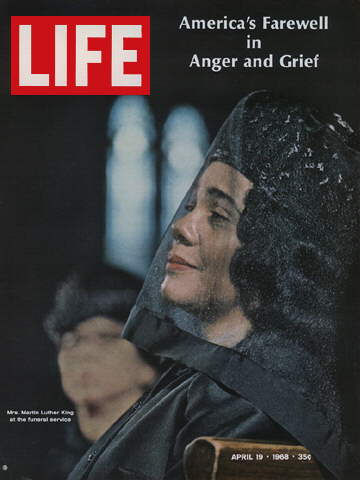
On the 40th anniversary of the assassination of Robert Kennedy, I would like to again share what I still believe is the greatest impromptu speech in American political history. The speech begins after you hear Kennedy asking an aide if the crowd knows that King has been killed.

By now, RFK’s speech in Indianapolis on April 4, 1968 — the night Martin Luther King Jr. was murdered — is the stuff of legend. Books and articles have parsed it and honored it and even shown that his beautiful quote from Aeschylus might have been slightly inaccurate. No matter. I will never tire of hearing it.

Almost exactly two months later, Robert Kennedy was killed at the Ambassador Hotel in Los Angeles.

I was one of thousands of anonymous witnesses to these horrible events in LA. In fact, a year ago I was stunned to see that Evan Thomas’s wonderful RFK, Jr. biography includes a photo in which I can be seen, along with hundreds of others, clinging to the car in which Kennedy was campaigning in El Monte, California. I was actually there as a volunteer for the campaign of Kennedy’s opponent, Senator Eugene McCarthy. But as RFK’s convertible approached, I was lost in the frenzy.

Two days later, it was over.

This is the quote from Aeschylus that Kennedy spoke in Indianapolis on the night of April 4, 1968.

And even in our sleep, pain that cannot forget
falls drop by drop upon the heart,
and in our own despite, against our will,
comes wisdom to us
by the awful grace of God.

Aeschylus. Agamemnon (The Oresteia), 458 BCE


No Escape from Grief: The Ballad of Esequiel Hernández

Yesterday, I saw a film of such shattering emotional impact that it forced me to face just how much I have been missing lately by focusing more on artistic form than visceral emotion. In fact, I found being torn apart and rendered incapable of rational analysis to be nothing short of liberating.

But there I go again with the self-serving language that obscures rather than reveals emotion. I wasn’t “rendered incapable of rational analysis.”

I was crying and I couldn’t stop. On a bus. With people staring at me.

The Ballad of Esequiel Hernández (July 8th, 10 PM, PBS) tells the story of an 18 year-old American citizen – a son, a brother, a student, a friend – who was killed in 1997 near the Mexican border in Redford, Texas by US Marines watching for drug smugglers. While the rules of engagement did not call for deadly force, filmmaker Kieran Fitzgerald painstakingly details the series of events that led a U.S. Marine to shoot and kill Esequiel as he tended his family’s goats with a .22 rifle. Esequiel thus became the first American killed by U.S. military forces on American soil since the 1970 Kent State shootings.

So many of us respond to tragedy by playing an instinctive mental game. Surely, we tell ourselves, a tragic story will have one detail about a victim, one simple fact which will allow us to delude ourselves into thinking that we have found a reason for the unreasonable. Perhaps the victim was someplace he or she shouldn’t have been. Perhaps, even years before, the victim did or said something that even now allows us to temper our grief. It’s stunning how quickly we all, even unconsciously, resort to victim-blaming.

Some times we even say (or just think, if we are smart enough not to give voice to our least humane instincts) that “he got what was coming.” We think those words can provide a psychic antidote to the deeper horror that comes from pain that won’t go away. But that is when we must face the fact that good people like Esequiel Hernández, through no fault of their own, can sometimes die painful and tragic deaths simply by finding themselves in the cross-fire of powerful and violent institutions.

Esequiel dies because of an absolutely pointless and symbolic deployment of Marines as border guards in the “War on Drugs,” a mission for which they are scandalously unprepared. Before you know it — with the maniacal anti-immigrant rantings of media provocateurs like Bill O’Reilly playing in the background – a young man lies dead.

As I watched The Ballad of Esequiel Hernández, I kept playing a mental game in a vain attempt to rid myself of pain: At least, I told myself, the evil of the killers will provide a different kind of relief. They can be hated and resented and serve as the vessels in which I will place my rage at a young life lost too soon.

But then “The Ballad of Esequiel Hernández” deals a second blow. Fitzgerald profiles the four Marines — although the one who actually fired the fatal shot chooses not to be interviewed — with such nuance and emotional depth that it becomes impossible to find the relief and resolution that would come from clearly evil killers.

They are human.

And then all I felt was despair, left with a difficult challenge we all face as we try to make sense of the world. Like it or not, we must accept that some tragedies are destined to remain open sores on our souls, forever unresolved, forever a source of grief.

In the end, though, “The Ballad of Esequiel Hernández” comes back to a young man and his grieving parents. He didn’t have to die, but he did, and even now — a day later — I can’t figure out a way to move from relentless grief to any thoughtful action. I can’t figure out where to direct my rage.

I can only cry for Esequiel. And his mother and father and brother.


Why Not Feed the 24 Hour News Beast Something Truly Repulsive? The Case of Liz Trotta


With all the disgust I feel for much of the detritus that the 24 hour cable news channels use to fill their bottomless news hole, I won’t deny that I am simultaneously a fan. 


Hypocrisy? Maybe.  


CNN and MSNBC are simply indispensable for live coverage of breaking news. Further, they each are staffed with journalists capable of on the spot analysis and perceptive commentary that can be superb. I think of CNN’s William Schneider, former CNN Baghdad correspondent and bureau chief Jane Arraf and medical correspondent Sanjay Gupta.  And what about people at MSNBC like Robert Bazell, perhaps the best science and medical reporter of the last several decades, Keith Olbermann, political director Chuck Todd, and Tim Russert?


I should say that I don’t omit Fox News out of any knee-jerk revulsion.  I am glad the audience who feels their views represented by Fox has that highly partisan option. I only wish that they would at least be honest about their ideological slant, rather than continuing to make the embarrassing (and amusing) claim of fairness and balance.


Fox simply has very little, if anything,  to say to me.


But all three of the cable news networks are faced with an insatiable news beast demanding to be fed.  And it seems that, in the age of screaming and incivility, nothing fills a slow news day better than two or three minimally informed pseudo-experts trying ever-so-hard to out-shout each other. 


No surprise there.


There is an unintended, entertaining  benefit to all this: When your definition of news makes room for yelling by provocateurs rather than reporting by reporters, you occasionally are treated to an idiocy that transcends any definition of idiocy you ever imagined.


So here we go. Check out these comments on Fox News by Liz Trotta, her attempt to bring some “analysis” to the controversy over Hillary Clinton’s remarks about the RFK assassination.


And ask yourself: How does any news organization keep someone like Liz Trotta on the air? Where is her apology? Who will take the responsibility for deciding that suggesting the assassination of a presidential candidate should be a career-ender, something that should preclude her from ever doing news or commentary again?


This isn’t about her right to express herself.  She can be as astoundingly stupid as she wants. And she can do it on the air. The question is whether Fox will decide that the “decency-line” has been crossed.


Watch closely. Her comments come quickly at the end of this short excerpt. And they are repulsive.


Cornell Capa: 1918 – 2008

 No words.

Just Cornell Capa’s magnificent and profound photos, exquisitely gorgeous even when the subject was relentless suffering;  master of just how subtle and nuanced and packed with “color” a black and white palette could be.

Brother of Robert Capa and founder of the International Center of Photography.

It is sobering to think of the oppression, the suffering, the anguish that would have never come to light absent the body of work of the two extraordinary Brothers Capa.  

Cornell Capa, Photographer, Is Dead at 90


Dumb and Inappropriate Spontaneous Remarks by Politicians #1


There is one thing I find absolutely delicious about the otherwise suffocating 24 hour cable news beast. 


Politicians can be relentless in trying to fill the bottomless news hole with every last ounce of bloviation. But every minute they  spend on stage increases the chance that we will get a rare peak at the unexpected places his or her mind wanders when – heaven forbid – he or she momentarily sets the script aside. In a political world in which off-message spontaneity has become virtually extinct, we desperately need these moments to see what’s really inside.


I’ll never forget when Barack Obama was stunned by the second wave of Reverend Wright’s comments. Caught off guard, he uttered something almost never heard from a candidate for national office. He was hurt. Hurt. Later we got the more carefully crafted statement, but this brief moment of hurt revealed the extraordinary possibility that we may yet get a president willing to shatter political orthodoxy and — could it really happen? –admit to emotions.


But perhaps the mother of all unguarded moments in this election year came yesterday when Mike Huckabee lamely tried to be spontaneous and make a joke when his speech to the NRA was interrupted by some sort of loud noise.


I for one am perversely grateful that we now know what astounding stupidity was lurking just below the surface as Huckabee read from his canned script. I have heard dumb and I have heard dumber.


And this was monumental dumbness at its dumbest.


Tombs of Negligence: The Children of Sichuan


juyuan earthquake


Nothing gets me hyperventilating more quickly than rich countries allowing citizens lacking power and privilege to suffer in ways that are, at least to some extent,  preventable. 


Believe me, I am well aware of my own country’s shameful treatment of the powerless. But the cruelties we reserve for the hungry, the uninsured, the disabled, and the poor are old news. I already watched the horrors of Katrina unfold.  


But I honestly can’t say that, before the age of the Internet, I fully appreciated the seemingly limitless examples of wealthy societies that seem incapable of providing the most basic protections to those who might die without them.  


My favorite recent example of journalism shining a light on suffering amidst wealth was George Packer’s shattering portrait in The New Yorker of the slums of Lagos, Nigeria. If you have a strong stomach, read the piece and see the quality of life that the world’s 12th largest oil producing country reserves for its poorest citizens.


And now the Sichuan earthquake.


This week, virtually every new media technology brought us horrifying details of how the Chinese economic miracle had apparently not been quite miraculous enough to insure basic standards of safe school construction.  


In fact, so-called micro-blogging (Twitter, etc.) – which I now am ashamed to have occasionally ridiculed as nothing more than knowing when a friend decides to make a salami sandwich — came into its own and provided a tidal wave of instant details about the extent of death and destruction in Sichuan province.  In real time, we heard the cries of grief and the rage of Chinese citizens at a government that had allowed thousands of children to die in tombs of negligence, arrogance and shoddy construction. Who knew that cheap construction – specifically the use of concrete without steel reinforcement — is so widespread in China that it has its own nickname – “Tofu building?”


Richard Spencer, reporting from Sichuan province for The Telegraph, tells a chilling story of promises broken and young lives lost. Faced with this tidal wave of revelations, Chinese officials were forced to promise a rigorous investigation resulting in severe punishment for those at fault.


 A child is buried under the rubble at the earthquake-hit Beichuan County, Sichuan Province, May 13, 2008. China poured more troops into the earthquake-ravaged province of Sichuan on Wednesday to speed up the search for survivors as time ran out for thousands of people buried under rubble and mud. Picture taken May 13, 2008.


Smooth. Really smooth. And straight out of the authoritarian propaganda playbook: We’ll root out those at fault and punish them. “If quality problems do exist in the school buildings, those found responsible will be dealt with severely,” said Housing and Urban and Rural Construction Minister Jiang Weixin.


Excuse me Minister Jiang Weixin: Is there any chance you might be one of “those found responsible?”


I just had a sickening thought: Given the authoritarian impulse to quickly cover up crimes and negligence, at least Jiang Weixin will probably have those schools fully rebuilt before the reconstruction of New Orleans consists of anything more than Bush administration photo-ops.

Earthquakes, Catastrophe, and the Digital Age

The tragic earthquake in China has provided an extraordinary example of how a variety of new digital tools and technologies have dramatically changed the way we perceive, learn about, and – through media and culture — socially construct the narrative and reality of catastrophe.

The natural disaster has caused overwhelming and widespread damage in a fairly remote area of Sichuan province and revealed that many public buildings were not built to withstand an earthquake of this intensity. Many of the dead were in schools that collapsed and, according to reports, left thousands of students and teachers trapped and dead.


What I wanted to point out is that, alongside the tragedy and obviously deficient infrastructure, a fairly elaborate and advanced digital culture thrives. Consequently, while some cell phone service has been interrupted, an almost instantaneous and extensive use of various digital tools has unfolded.

Start with this link to the Poynter Center for an early rundown of how horrible, natural disasters unfold in the age of cell phones, Twitter, Youtube, blogs, streaming audio and video, video sharing, news aggregators, social networking and everything else.

http://www.poynter.org/column.asp?id=31

I have seen some interesting examples today of how Twitter in particular has emerged as a major source of news and information for concerned friends and family members in China and around the world.

I wouldn’t want anyone to think that, in pointing out deficiencies in Chinese infrastructure, I had forgotten, or will ever forget, the race and class based infrastructure deficiencies existing here in the United States that were very much a part of why and how Katrina happened.

Hi Mom. Don’t Mind the Gunfire on the Answering Machine. It’s Just War.


I have written and rewritten this at least ten times which – if I was half as self-aware as I like to think — should have told me something. Because when I get stuck like this, I am almost always closing in on some emotion or anxiety that I would rather ignore. (Great strategy, huh? Ignoring emotions.)


But last week I was haunted by the experience of the Petee family in Oregon whose son, Stephen Phillips, is serving in Afghanistan. In the midst of a firefight, the young soldier accidentally activated his cell phone and sent home an audio message with a recording of the whole business — gunfire, screaming, everything.


 It struck a chord.


My son, of whom I am enormously proud, served in the Peace Corps in West Africa. During his service, the largely stable country where he was serving was thrown into chaos by the death of a long-standing dictator. For one short period, his safety was in doubt, but thanks to cellular communications, he remained in cell phone and email contact for all but several days.  Nothing happened even remotely comparable to the war in Afghanistan, but there was a lot of political violence and killing.


And to this day I still debate whether, given the choice, I would have preferred the detailed phone calls and emails I received or preferred ignorance.


I know mental health orthodoxy: It’s better to know the truth than to live with ignorance or illusions. But the digital age has enabled a level of immediacy that really tests this principle. Might there be times,  particularly in our personal lives, when globalization and transparency and instantaneous communication is unbearable? Do we always need, or can we always tolerate, living in real time?


Sure, I was able to share a few of my son’s most challenging moments. But the pain and the fear were palpable, despite the laughter and casualness I tried to project on the phone. He never experienced anything close to the soldier from Oregon, but – for a Dad who used to worry about his walks home from school — a civil war by cell phone was pretty painful.


The worst moment was when, after several days of frequent contact, the government shut down all cell service. At that moment, I had to instantly transition from full awareness of his situation to full ignorance. Not for the faint of heart. Not for me.


And so I again ask myself: Would it have been easier knowing little or nothing the whole time? Or was I less anxious because I had periodic, albeit erratic, news?


I only am certain of one thing: The answer doesn’t mean a thing. Because the digital genie is completely out of the bottle. We are now full participants in an age when we will quickly learn painful realities whether we want to or not.


My son is fine, by the way.


For those of you who didn’t hear it, here is the phone message that 22-year-old son Stephen Phillips left his parents on April 21st. The recording includes three minutes of gunfire, a voice shouting “Incoming!”, and a stark and sudden ending. Stephen Phillips suffered no injury. 


I wonder if we can say the same thing about his mom and dad.


P.O.V./PBS 2008 Season Preview

Vodpod videos no longer available.

Please do me a favor and look at a preview of POV’s extraordinary 21st season. If any of the films really grab you, more detailed information and trailers and broadcast times are available here.

The entire season schedule can also be downloaded or saved. You could hardly say that any of the 21 amazing seasons of Public Televsion’s most important showcase for docuimentary films were better than any other.

But 2008 is really breathtaking.

Now, if you’ll excuse me, I am watching Natalia Almada’s “Al Otro Lado” (POV’s 19th Season) for the 20th time so I can enjoy the incomparable footage of La Malandrina Jenni Rivera and Los Tigres del Norte!

Anybody know when Los Tigres are coming to New York? And do I have make a trip to my hometown LA to see Jenni? The last time I tried to buy tickets for Los Tigres, they were being scalped at $350 – $500.

L.A. is actually not such a bad idea. Perhaps I’ll post some Jenni Rivera music at some point so you can see why, when push came to shove and I was little under the weather this spring, Jenni and Los Tigres were there for me.

¿Quién sabe? ¿Soy quizá un Norteño judío?

No, I Don’t Know Why I Liked The Jetsons So Much

Yup, I loved the Jetsons.  So sue me.

Meet George Jetson.
His Boy Elroy.
Daughter Judy.
Jane his wife.


Bear With Me: Remembering the Lazarsfeld Stanton Program Analyzer


Sometime in the late 1950s, my elementary school class was loaded onto a bus for the 27 mile trip down the San Bernardino Freeway from Rowland Avenue Elementary School in West Covina, California to CBS Television City in Hollywood.


The media were already in my blood and I just may have been the most excited kid in the class. We were going to be in the audience of Art Linkletter’s House Party to watch several of my classmates appear on a legendary segment of the show  called “Kids Say the Darndest Things.”


To this day, it bothers me that I wasn’t chosen to be on the kids segment. I never learned why. I actually remember a counselor at UCLA’s psychological services center in 1969 looking at me like I was nuts when I described it as one of my “fundamental hurts.”


But the real shocker was when we pulled up in front of Television City and my entire class walked onto Linkletter’s soundstage, with the exception of Rachel, Barbara, and me.  A nice man in a bow tie who looked vaguely like Wally Cox diverted us into a small screening room  studio with wires everywhere and asked us to remain seated and quiet.


I was devastated. No Art Linkletter. No “Kids Say the Darndest Things.” No soundstage.


Then Wally returned and told us that we were going to be part of an important experiment. They wanted to see how a machine that had already been around for a while, a machine that tested whether people did or did not like television shows, would work with kids. And so they gave us each two small devices, one of which we were to hold in each hand.


“Press one button when you like the show, Wally told us, and press the other when you don’t.”  Then the lights dimmed and an episode of the not yet broadcast sit-com “Dennis the Menace” came on the screen. For 25 minutes, I watched this ridiculous show and never lifted my finger from the “don’t like” button.


I really thought it was dumb. I was mad at missing all the fun. Story over.


Well, not quite.


Almost exactly twenty years later I was sitting in a graduate seminar on methods of media research at Columbia with a brilliant young professor, Dr. Josephine Holz. And that was the day that I learned that the machine had not been just any contraption, but something called the Lazarsfeld-Stanton Program Analyzer, a pioneering device designed by two towering figures in the history of broadcasting, Drs. Frank Stanton and Paul Lazarsfeld.  It may have taken 20 years, but finally it was the other kids who had been the losers and it was me who had been actually hooked up to the machine.


Oh, and I still think Dennis the Menace was a dumb show.


Now if you want to talk about The Jetsons, that was a work of genius.


P.S. This is an old yet fascinating scholarly article about the machine.


Levy, Mark R. The Lazarsfeld-Stanton Program Analyzer: An Historical Note
The Journal of Communication, 1982 VL. 32, No. 4. PG: 30-38.

Music #2: Two Favorites by the Boys from Liverpool

After a day filled with serious news and other gravitas, I’m almost always looking to come down with music.  And I never have even the slightest idea where I will end up. Ave Maria is just as likely as Cream. Mozart’s Clarinet Concerto has as good a chance as Skeeter Davis.

Well here is where I went tonight. These are two of my favorite songs by the boys, “You Can’t Do That” and “It Won’t Be Long.” 

And yes, I did see them in concert in the summer of 1965, thanks my Mom, who surprized my sister and I with tickets when I got out of the hospital after having my tonsils removed.

I still have the stub and the program from that night. They played from a stage that covered second base.

.

More on New York Times Investigative Piece on Military Analysts

Sometimes I think that the word “liar” is the linguistic third rail of American politics. Even in the dirtiest political campaigns, adversaries are often reluctant to call each other liars, as if avoiding that word means they have held the line and remained civil.

Thanks goodness I’m not running for office. I can say “lie” or “liar” when I want.

But – truth be told — I rarely do so. And when I do, I do it carefully. Because lying, at least as I have always understood it, is not simply making a mistake: It is intentionally telling someone something that you know not to be true. It is using a position of superior power and influence to say something untrue to hurt or deceive another person.

And, in the worst case, it is intentional deception that makes it more likely that another human being might be hurt, injured, or killed.

That is why I really have no problem saying that David Barstow’s remarkable piece in today’s New York Times, telling the story of how the Pentagon groomed some of the military analysts who have appeared on television to offer opinions about the war in Iraq, is a story about liars.

After reading Barstow’s piece, I feel on absolutely solid ground using the word. This is the story of a small group of senior military officers who, knowing one truth about the disastrous progress on the ground of the war in Iraq, intentionally went before mass audiences and – under the direction of the Pentagon — made contradictory and untrue statements, statements that they hoped would have the effect of marginalizing and silencing opponents of the war.

Even worse, these were lies that several now admit were made to protect ongoing profitable relationships with the Pentagon and defense contractors.

Angry disagreement about foreign policy is one thing.

But this was lying. And it was lying that cost lives. It is despicable.

Read it and see if you agree.


“I Felt We’d Been Hosed:” When Pentagon Propagandists Lie to Their Own Supporters

I hate the term “must read.” Who decides what the “musts” are? And whose interests are served when something must be read?

Forget all that. This is a must read.

Today’s New York Times strips away the veneer of phony objectivity of the military analysts who appear on network television.  David Barstow’s riveting story “Hidden Hand of Pentagon Helps Steer Military Analysts”   (registration required)  details the Bush Administration’s effort to curry favor with a group of network television  military analysts and keep them supplied with self-serving talking points.

And yet this isn’t the most stunning part of the story.

Administrations have always fought to have the media well supplied with a selective version of facts that are often at odds with what soldiers are seeing on the ground. Spinning and hosing is an old story.

The real stunner, and I’ll let you read it and decide, is the story’s evidence that — by not even telling the truth to the analysts ostensibly sympathetic to the administration — the adminstration left a slew of their allies feeling burned and lied to or what one senior officer called “hosed.”

It’s one thing to create propaganda that you dish up to your adversaries. This is the story of how the Pentagon tried, often unsuccessfully, to spin their own supporters in the military who served as media analysts. 

And how one ended up saying “I felt like we’d been hosed.”

A must read.  Superb reporting by David Barstow.

Andrew Malcolm of The LA Times May Need to Do Some Deep Breathing Exercises

Andrew Malcolm does a blog on politics for the Los Angeles Times. It is called “Top of the Ticket.”


I need someone to do a reality check for me.


In the last hour Malcolm posted what is either a pretty nifty prank or an astoundingly dumb column suggesting that today in Pennsylvania Barack Obama gave Hilary Clinton the finger during a speech.  Now I think Malcolm may be joking as a way of satirizing last night’s nit-picking, issue-free debate.  I have seen Obama scratch his cheek this way countless times.


But what do you think?


I think that if he is serious, and that if he really believes he sees Obama flipping the bird, Malcolm may truly be coming undone. And the LA Times may have posted the single strangest column thus far in the election season. Am I hopelessly old-fashioned or am I right to think that it is beyond weird for the LA Times to use any of their space for nuttiness like this?


Check out Malcolm’s post and the Youtube video below. Somebody please tell me if you think Malcolm is joking or if you think he did give the middle finger.


The Piety Test

Are any of you watching tonight’s “Compassion Forum” live from Messiah College in Pennsylvania? One after the other, Senators Clinton and Obama are answering questions about religion, faith, and compassion.


I’ll share something that I rarely talk about: My religious beliefs are central to who I am, especially what Jews call Tikkun Olam, or “repairing the world” through selflessness, good works and charity.  No big surprise that I don’t always act in according to those principles, but I do try.


So why does a “Compassion Forum” give me the willies? Why do I find myself interested in the questions being asked of each candidate and the answers being given, yet still profoundly uneasy about the whole thing?


I had the privilege of growing up with a close friend whose father was the sage and compassionate leader of a major Protestant denomination. Not the typical friend of a Jewish kid from Southern California, but – hey — how often do you get a best friend with whom you can simultaneously act out adolescent nuttiness and contemplate profound matters of faith.


What I am leading to was a view of church-state relations I learned from my friend  that has been basic to who I am: The temptation to mix and confuse the unique roles of government and religion, especially in fearful and uncertain times, is understandably great. This impulse makes perfect sense given that religion offers beliefs and ideas that can enrich so many areas of human endeavor, especially the political realm where, shall we say, truth seems to be a pretty slippery concept.


But I also learned that the separation of the two realms protects both: Government in a democracy needs to protect the free expression of diverse and even unpopular takes on religious faith. Religion needs the freedom to proclaim ideas and beliefs without having to answer to government institutions that seem pretty inept when it comes to the realm of the spiritual.


So again: The sight I am watching of two presidential candidates being grilled about their beliefs, however fascinating, is not something with which I will ever be comfortable. It simply has too much of the feel of a public test, in which each candidate’s views will be judged for adequate piety and purity; in which the candidates can easily slip into a “faith-competition.”

I’m watching. And listening raptly. And wishing they never felt this necessary.  

Dead Famous Person (D.F.P.) and Journalist


This happened about six months ago. I have tried to forget it. So much for forgetting.


A famous person was killed.  Within the hour, people who knew dead famous person (D.F.P.) began circulating the news and posting emotional reactions on the Internet.


One of those posts was by a less famous, high profile journalist who almost immediately published an astoundingly scathing portrait of D.F.P.


D.F.P.,  he argued, was – in his relationships with other still-alive famous persons — mean-spirited, arrogant, dishonest, and even cruel.  Those who only knew of D.F.P.’s public contributions and admirable body of work (like me) were stunned.  This wasn’t Pol Pot, but was someone who very well might have been a jerk.


The story would have ended there, were it not for the anger I began to feel for the speed with which the critical piece appeared. D.F.P.’s  funeral had not yet taken place, and many friends and admirers were still coming to terms with a tragic death.


So I called journalist, and asked:


“Is there any case to be made for a “grace period,” however short, between a death and the publication of a scathing personal portrait, particularly when the scathing stuff is primarily inside information?”


“Might D.F.P.’s family and friends deserve even a day or two before nuanced and critical portraits became absolutely acceptable?”


“Or has the era of blunt and instant information made it old-fashioned or impractical to temporarily hold fire out of respect for a family’s feelings?”


Journalist’s answer still chills me.


“Sorry, but I don’t buy into false sentimentalism.  I wrote the truth.  Period.”


I really couldn’t respond.  I still can’t.


What can you say to someone who sees even temporary consideration of a family’s feelings to be nothing more than “false sentimentalism?”

Music #1: One of the Greatest Live Rock and Roll Peformers Ever, Freddie Mercury

Some of the purists will be wincing. This wasn’t really rock and roll. It was spectacle. It was pop. No edge. Overproduced. 

Fair enough. All I know is that I loved, and still love, Freddie Mercury and Queen.

I had a hard but rewarding day and, when I got home tonight, I instinctively turned for relaxation  to this excerpt from Queen’s July 13, 1985 Live Aid concert appearance at Wembley Stadium in London, England. 

Freddie Mercury — an original, a character, and one of the greatest stadium performers ever.   In fact, this specific peformance has, in several polls of rock critics, been voted among the greatest live performances ever. Did any of you ever see him perform live? I didn’t.

This excerpt from the concert includes Bohemian Rhapsody and Radio Ga Ga.

Freddie Mercury  1946 – 1991

Life Magazine and the End of Innocence: April, 1968

dickand Jane

Think of every episode of Leave It to Beaver or Father Knows Best that you’ve ever seen.

Think of every stock photo and stereotype about 1950s and 1960s suburban America. Think about Dick and Jane reading books, gingham aprons, milk served in pitchers and cookie jars.

Think about kids lined up for polio shots, Ed Sullivan, and service station attendants wearing well-pressed uniforms.

It was not a complete fiction. I know. I was there.

But also – while you’re at it — think of whiteness, of blocks and blocks of white families doing white things, opening mail boxes to find magazines filled with stories about patio furniture and backyard BBQs and vacations in station wagons. And think of house after identical house, where any internal emotional turbulence or troublesome external social ferment could always be neatly hidden beneath the veneer of Cub Scout meetings, bake sales, and summer vacations.

Think of a whiteness so relentless that it was both everywhere and nowhere, pervasive yet so taken for granted that it could hardly be noticed. Imagine a place where you could come of age without ever seeing a black person in the flesh.

I thought of all these things – suddenly and without warning — in the middle of giving a lecture this Wednesday to 150 undergraduates about the rise of demographics, targeted media, and the death of mass circulation magazines. I talked about bloated audiences who, in their lack of demographic desirability, held no interest for advertisers starting to strategically target their messages. I thought of Life Magazine, on the verge of collapse. And I then I remembered the day that this issue arrived in our mail box.

Martin Luther King had been assassinated two weeks before. The event stunned and horrified us. I was fortunate to have parents who had taught my sisters and I about racial injustice. I still treasure the memory of one of my father’s finest moments when, hearing me utter an offensive racial remark at the age of eight, followed the charming fashion of the day and filled my mouth with a bar of ivory soap.

But we lived where we lived, and this magazine arrived like a live grenade. Martin Luther King, Jr. was dead, and now we had to look his wife straight in the face. We had to see her grief. Even worse, we had to contend with her serenity in the midst of the horror. We had to imagine her husband with his eyes closed, stilled and silenced.

I know that sometimes, in our zeal to construct compelling life narratives, we look back and overstate the significance of events. But I also know that nothing was the same after that magazine arrived. Our comfortable world had been pierced by the reality that rifles could silence a man’s passion and indignation.

And there is no dramatic or profound ending to this story.

Nothing magic happened. Miraculous revelations of tolerance were nowhere to be seen. There was no justice and nothing was flowing like a mighty stream. Our neighborhood stayed the same. Most people remained remarkably skilled at maintaining a willful blindness that obscured the anger and ferment brewing in distant places.

But never again could we claim, at least not with a straight face, that we knew nothing of that other world where guns were fired and justice denied. It arrived on the cover of a long-defunct magazine, and somehow we sensed that the dream deferred, festering like a sore yet so invisible in our blindingly white world, would soon explode.

Martin Luther King, Jr. (January 15, 1929 – April 4, 1968)

The names of those who in their lives fought for life
Who wore at their hearts the fire’s center.
Born of the sun they traveled a short while towards the sun,
And left the vivid air signed with their honor.
 

 I Think Continually Of Those Who Were Truly Great

Stephen Spender

I think continually of those who were truly great.
Who, from the womb, remembered the soul’s history
Through corridors of light where the hours are suns
Endless and singing. Whose lovely ambition
Was that their lips, still touched with fire,
Should tell of the Spirit clothed from head to foot in song.
And who hoarded from the Spring branches
The desires falling across their bodies like blossoms.

What is precious is never to forget
The essential delight of the blood drawn from ageless springs
Breaking through rocks in worlds before our earth.
Never to deny its pleasure in the morning simple light
Nor its grave evening demand for love.
Never to allow gradually the traffic to smother
With noise and fog the flowering of the spirit.

Near the snow, near the sun, in the highest fields
See how these names are feted by the waving grass
And by the streamers of white cloud
And whispers of wind in the listening sky.
The names of those who in their lives fought for life
Who wore at their hearts the fire’s center.
Born of the sun they traveled a short while towards the sun,
And left the vivid air signed with their honor.

Fear + Hyping = FYPING: The “Crystal-Methification” of 24 Hour Cable News

Remember Howard Beale, the anchorman played by Peter Finch in the film “Network?” I always think of his “mad as hell” moment when I see the latest example of 24 hour cable news networks like MSNBC and CNN and Fox shamelessly pumping overdoses of adrenaline and fear into anything they characterize as “breaking news.” Video is played and replayed, graphics and special effects get more and more dramatic, any pseudo-expert who claims to have a legitimate “Dr.” is instantly anointed an authority, the voices of announcers take on an unintentionally hilarious pseudo-gravitas, and we are off and running on our latest social panic.

Yes, I understand that the business model requires that an audience be delivered to advertisers. If audience research has genuinely shown that hyper-ventilation attracts larger audiences, more power to them. At least in the new age of digital information, we have alternatives like RSS feeds, the Internet, radio, local newspapers, blogs and all the other new technologies and techniques.

So if there are so many other choices offering the same content, why does this nutty hyper-activity still bother me? It’s that I can’t shake the fact that there are still large audiences being subjected to “news on crystal meth” whose world view is being shaped by the idea that the basic elements of human life are “fast-breaking,” “urgent,” and “exclusive.”

Hyping a balloon trip across New Mexico or a butcher closing after 30 years is one thing. But what about all the times when the news has to do with some aspect of life, health or safety that really affects the way people live? What if the news is about the efficacy of a medication? The recall of a food product? Or a new strain of the flu virus that was not covered by the last flu shot? A terrorist incident? A crib with a defective mechanism?

This is where the breathlessness and hyper-hyping can do its real dirty work, pumping up the volume so high that basic facts get lost amidst the cacophony. Let’s say the news is calling a widely used medication into question. Pity the viewer who really needs to hear the nuanced findings that will allow him or her to make an informed decision. And what of the stories completely buried under the avalanche, like the risk of falling among older citizens. Fear-hyping, call it FYPING, makes it all but impossible to communicate this nuance with care and concern for the people whose lives are affected. And how long is news actually “breaking?”

I have seen stories on the AP wire in the morning that 12 hours later are still being reported by MSNBC’s Dan Abrams with an ominous breaking news logo and nerve-shattering theme music.

Of course the answer is that the news is only breaking as long as we let it, as long we listen or watch. But never, ever try to tell me that in matters of true urgency, where health and safety are really on the line, that this is how you most effectively communicate the specific information that people really need. CNN’s Sanjay Gupta and MSNBC’s Robert Bazell are notable exceptions, but most of the time frenzy reigns supreme.

And all we get is the adrenaline without the content. The fear. The hyping. The fyping.

Thank you Howard Beale. I’m mad as hell and I can’t take it anymore.

Digital Culture as a Response to Social and Environmental Tragedy

One of the most wonderful things about my job is being surrounded by people whose work faces social and environmental change head on. I mean, think of it: Part of what I get to do is learn from, and engage with, people who not only live and thrive amidst the breakneck speed of a digital world, but seem to be able to ride it — along with all the accompanying social change — like a wave. 

They see things I don’t see. They hear things I don’t hear.

Two people came to mind today, and I wanted  to share links to their work with you.  

I won’t try to describe the breadth of Mary Flanagan’s interests. In addition to being a pioneer in gaming for social change,  Mary has written widely about the impact of digital culture on our senses, on the way we concieve of public space, and many other topics in the growing field of psychogeography.  For a wonderful introduction to her work, check out the Tiltfactor web site and her own site 

What I wanted to share is a brief interview Mary did this week on the NPR program FutureTense about games like Peacemaker, Food Force and Darfur is Dying. Many of you may not know that gaming is right in the middle of urgent debates about war, genocide, hunger and other ongoing human tragedies. 


So here is how my catastrophically-oriented mind works. As I watched Mary’s interview and thought about these games, another tragedy was taking place this week in Antarctica: A massive  ice shelf began to collapse, apparently due to climate change. And I thought of my colleague Andrea Polli.

 polli_portrait_mic_small.jpg

Andrea spent a good portion of her sabbatical this academic year in Antarctica, focusing on the meeting point of sound, art, global change, and the environment.  Among her projects was the recording of an extraordinary series of sounds from the natural environment that are both beautiful and haunting. Included is a truly poignant recording of an iceberg breaking up that is almost impossibly sad to listen to. In fact, to get a sense of her artisitic project and vision, check out her site 90 Degrees South.

Here is another link to a WNYC broadcast in which Andrea shares her passion for sound:  Originally broadcast in March, 2007, it features Edmund Mooney, co-founder of the New York Society for Acoustic Ecology, speaking with Andrea about the New York Sound Map, a collaborative audio map of New York’s audio environment.

I’ll be very honest: My foot is just enough inside the pre-digital, “old-media” era that keeping up with a constantly evolving and expanding definition of media and culture can be a disorienting experience.

But it is nothing less than thrilling to watch colleagues like these navigate a world so confidently that was unimaginable even just a few short years ago.

Supporting Actors? Character Actors? How About Just Actors?

I collect supporting actors, character actors. I revere them. I “cast” them. I watch feature films just to see their ten minutes of brilliance.  Part of this comes from my Dad.  

Like anyone who has even remotely participated in our family’s gene pool, he at one point got the acting bug. Unfortunately,  his screen career was limited to about 15 seconds as an extra in the 1949 film “Bad Boy,” when – sentenced along with Audie Murphy to a juvenile delinquency facility — he can be seen on camera rising up in anger and threatening the judge. (By the way, he was great!)

As I grew up, each re-run of “Bad Boy” would be an opportunity for a real family celebration. We would gather around the television, wait for the scene, watch his brief grimace, and cheer. And that is when I started watching these actors. 


I don’t know why I feel funny using the term “character actor.”  It has always  seemed  to demean the brilliance I would see in their performances, suggesting limitations rather than versatility. I know that some people use the term as high praise. I finally settled on “actor.”   

My favorite recent example – out of hundreds — is the absolutely brilliant Ned Eisenberg. In the first fifteen minutes of Oliver Stone’s World Trade Center, Eisenberg – playing one of the Port  Authority police officers heading toward the towers – arrives on the scene and simply looks up.  But his reaction, so full of complexity and bewilderment and fear, and lasting no more than a brief moment, haunts the rest of the film.  His character knows that he has been instantly thrust into the worst day of his life. And we know this because of one subtle, nuanced and masterfully delivered glance.  


But I am a huge fan of these masters of their craft and wanted to share some absolutely random names. They could just as easily be followed by hundreds of others. Some occasionally made their way into starring roles, but their greatest moments were often glances, smirks, grimaces, or blank stares into the distance.

Thelma Ritter, Edward Arnold, Dabbs Greer, Robert Loggia, Ruby Dee, Andrew Robinson, Ward Bond, Robert Walker, Morris Ankrum, Charley Grapewin, Alfre Woodard, Ned Eisenberg, Paul Meurisse, Jane Withers, John Doman, Amanda Randolph, Margaret Dumont, Miriam Colon, Guy Kibbee, Barnard Hughes, Harry Dean Stanton, William Daniels, Bruno Kirby, H.B. Warner.       

Who would you include? Full-blown, leading-role movie stars are ineligible.

A Thunderbolt from William Faulkner

My friend and colleague Mick Hurbis-Cherrier sent me this extraordinary and completely unexpected example of a speech of transcendent eloquence.  It was a timely and embarrassing reminder of how instinctively I still sometimes think of speeches as something that politicians do.  Thanks, Mick. 

Steve, I can’t thank you enough for the compendium of moving speeches you’ve posted here.  It reminds us that there was, and still is, nobility among our political leaders, and therefore in the voters and supporters who gave them these platforms to begin with.  These speeches also remind us of how much work there is to be done in confronting  racism and sexism (which has also reared its ugly head in this primary) despair and cynicism. 

In any case, I too was moved by Obama’s speech like I have never been moved by a political speech since before I was able to vote: honest, personal, complex, important and dead on.  I’ve heard writers, professors, friends, community leaders, colleagues, etc. talk like this, but never someone who was seeking a critical mass of votes to win national office.  You see, my political consciousness began with Watergate and late Vietnam (the American embassy in Saigon was evacuated on my 11th birthday, which made it a solemn occasion).  I cast my first presidential vote for Jimmy Carter when he lost to Ronald Reagan.  B. Clinton’s presidency was the only bright spot in an otherwise depressing experience for me as a voter in presidential elections (Reagan x2, Bush x3) and even that ended in a severe disappointment. 

And along with everyone else, I’ve witnessed the near total erosion of eloquence, substance and inspiration in political speech making.  So much have presidential hopefuls learned over these years to be more careful and less substantive with their speeches, that I was beginning to feel that anyone who held profound or complex ideas, and a desire to speak truthfully, was essentially ill equipped to be elected president in this country after so much Reagan and Bush can you blame me for thinking this?  (BTW, I never understood why Regan was dubbed “the great communicator” and I never understood people who said that George W. Bush is a guy they’d like to have a beer with, talk about dull company!)  

Anyway, I wanted to share a speech which “struck this kid like a thunderbolt” when I discovered it browsing the public library shelves as a 13 year-old, which I did a lot (like you, I was a weird kid in some ways).  This speech, which addresses being a writer (artist in general) in a cold war era on the brink of nuclear apocalypse, continues to be inspirational and influential for me, as only something which tags your consciousness at a tender age can be.  It’s not a speech made in my lifetime and it’s not a speech by a political figure, but it shares, with all the speeches you’ve posted, a fervent appeal to our collective humanity which, one hopes, remains a greater force on one’s actions than the specific crises of the day.  It is through our humanity (the recognition of ourselves in others and the recognition of the best we can be in ourselves) that we can move toward progress rather than slide back into bitterness, hatred and revenge (as RFK says in his MLK speech).  

In his speech on race, Obama quoted William Faulkner’s famous line from Requiem for a Nun, “The past isn’t dead and buried. In fact, it isn’t even past,”  (btw. Faulkner’s actual line is: “The past is never dead. It’s not even past.”). This reference reminded me of William Faulkner’s speech upon receiving the Nobel Prize for Literature in 1950, the text of which I am submitting here.  Nikki Giovanni’s fiercely healing poem to Virginia Tech, which you posted, stands as a perfect example of what Faulkner is talking about.

Mick

Acceptance Speech by William Faulkner, Nobel Prize in Literature, December 10, 1950

What Words Have Touched Your “Better Angels?” Send Me a Speech!

I have a request.  If any of you have ever  been haunted or inspired by a speech, tell me about it in a comment below.   I might even be able to find audio or video and post it for everyone to see.

By the way, I know that some of you have been enraged rather than inspired by speeches. If you took my course on the propaganda of war and genocide, you have heard them too. In fact, I have probably heard more ugliness than inspiration.  Someday we might even post a “top ten” list of the most vile and hateful speeches of all time.
But every so often I really get tired of all the ugliness that people inflict on each other and find I need a dose of what Lincoln called the “better angels of our nature.” So let’s stick with inspiration, with love, with selflessness. What speeches  have inspired to you to reach for those angels?

We can always get to the ugliness another time.

Eloquence That Struck a Kid Like a Thunderbolt Part#2

U.S. Representative Barbara Jordan’s Keynote Address to 1976 Democratic Convention, July 12, 1976 

Senator Obama – with his willingness to speak so openly about our nation’s shameful racial history — almost certainly stands on the shoulders of this extraordinary woman.  I am not sure I have ever heard any human being speak with such moral authority and so openly about race. She was a singular leader for people of color, for women, for the disabled and for all Americans.  I would have followed Barbara Jordan to the gates of heaven or hell, although if you happen to be looking for her, I have no doubt at which of those two locations she can be found.    

Senator Robert Kennedy’s Tribute to His Brother John. Democratic National Convention. August 27, 1964, Atlantic City, New Jersey

Within a year of his brother’s assassination, Kennedy stood before the convention and through his tears, in my favorite use ever of a Shakespeare line in a political setting, used these lines from Romeo and Juliet to speak of his brother.  

… when he shall die, Take him and cut him out in little stars, And he will make the face of heaven so fine that all the world will be in love with night. And pay no worship to the garish sun. 

“We Are Virginia Tech:” Poet Nikki Giovanni, Virginia Tech Memorial Service, April 17, 2007

To speak to those who are hurt and grieving right after a tragic act, and give voice to pain that seems to defy expression, is one of the highest callings of a speech. At just the moment when so many of us find ourselves paralyzed by grief, we ask someone of wisdom and eloquence to find the right words and to do it as they struggle to surmount their own grief. Few have ever done it more profoundly than Nikki Giovanni did in the aftermath of the Virginia Tech tragedy.

A Mystery Speech 

Actually, I’m not being cute. I have kept it a mystery because I am ashamed of who delivered it.  That’s right, some of my favorite lines from a political speech were uttered by someone who was given the public trust and proceeded to destroy himself and the country with almost nightmarish scorn for the rule of law.  I am pretty sure I know the identity of the speechwriter who actually wrote these words (it wasn’t the man who delivered them), and they still move me.

It does, though, raise the fair question of whether the words of a public figure can or should ever be considered separately from their subsequent actions. Because, for me, appreciating these words requires an almost complete  suspension of the knowledge of who spoke them. But they still moved me, and I have put my favorite lines are in bold. 

To a crisis of the spirit, we need an answer of the spirit. To find that answer, we need only look within ourselves.  When we listen to “the better angels of our nature,” we find that they celebrate the simple things, the basic things—such as goodness, decency, love, kindness.  Greatness comes in simple trappings. The simple things are the ones most needed today if we are to surmount what divides us, and cement what unites us. To lower our voices would be a simple thing…..We cannot learn from one another until we stop shouting at one another—until we speak quietly enough so that our words can be heard as well as our voices.

Eloquence That Struck a Kid Like a Thunderbolt Part #1

I have been thinking a lot about political speeches this week. Because, while many of you at the age of nine were doing cool kid stuff, I was often hidden away following politics and watching or listening to speeches. I ate them up. I loved the high drama, the displays of courage, the revelations of cowardice, and the occasional moments of eloquence. Yes, I was a little weird.

(Don’t feel too bad for me. I also loved skateboarding, tree-climbing, Leave it to Beaver, Mighty Mouse, Chef Boyardee, and had a crush on a girl in my 6th grade class that was a killer!)

Seriously, Senator Obama’s speech on race is what got me thinking. I almost choked when I heard him opening up the darkest places where our society’s secret and hidden and subtle racism still festers.  He opened a discussion that — if we join in, regardless of the candidate we support — will mean going toward the ugliness rather than away from it. It will mean examining what James Ellroy, referring not to race but to family trauma, has  called “My Dark Places.” We may or may not be ready. But out of the hurt just might come healing.  

So I thought I would share with you some of the other speeches or examples of improvised public rhetoric that have moved me over the years. They are seared in my memory. And for this go-round, I am limiting myself to speeches by Americans. More to come soon from many places around the world.  

Attorney Joseph Welch Confronts Senator Joseph McCarthy at the Senate “Army-McCarthy Hearings. June 9, 1954 

At the height of Senator McCarthy’s reign of terror, he launched a particularly vicious attack on a young lawyer named Fred Fisher unfairly accused of communist sympathies.  Rising to Fisher’s defense with barely contained rage — surrounded by hundreds or reporters and legislators with in a crowded Senate room — Fisher’s law partner Joseph Welch of the Boston law firm of Hale and Dorr essentially destroyed Senator McCarthy with a thundering statement that included the famous “Have you no sense of decency?” 


“I Have a Dream” Martin Luther King, March on Washington, August 28, 1963   

I include this not as a formality, but because it shook me to my core for a very special and still embarrassing reason: I lived in a completely white community and had never had any personal contact with an African American. None. I was 12 years old. Never even a shake of the hand or a nod in the street. No contact. I didn’t know the world King was describing. In some ways, northern suburbs were as segregated as the deep south. And then the floodgates, then this speech. 

Stump speech by President Lyndon Baines Johnson. Summer, 1964. Downey, California. 

When my Dad took me to see an LBJ campaign rally, I only knew the deadly boring television speeches LBJ gave and the mounting Viet Nam war dead. No one I recall was more awkward and less eloquent on television. What I didn’t know then was that, when the topic was the humiliation of poverty that had marked his youth and haunted him his whole life, and when he was speaking without a script, he was one of the greatest and most inspiring stump speakers ever.  

RFK Announcement of MLK Assassination, April 4, 1968 This is the greatest speech I have ever heard. Period. RFK had nothing less than the task of announcing  MLK’s assassination to a largely African American crowd in Indianapolis. My eyes moisten just typing these words. All I can say is: Please listen to it. In fact, file it away after you have listened to it and have it ready to play any time you have to deal with some grief or loss.  

 Part #2 coming soon

More on Pseudoexperts, Teletherapists, and Lemmings

I wanted to thank the folks at Broadcast Newsroom’s portal for picking up my post on the phony teletherapists  and self-help vultures who are already hard at the ethically dubious task of solving Eliot Spitzer’s marital problems by long distance.

They have a “Volume Control” column that pulls comments about broadcasting issues and controversies from the blogosphere. It’s worth a look.

And while you are at it, check out one of the worst offenders, who from the comfort of The Today Show studio — without meeting with or treating any of the involved parties — blames Mrs. Spitzer for Mr. Spitzer’s acts.

Using unethical, long-distance teletherapy for publicity is one thing. I just wonder how supposed professionals — however dubious their credentials — sleep at night knowing they made diagnostic and prescriptve statements about real, hurting people using news reports.

http://www.msnbc.msn.com/id/23575221/

I remember something I wrote when I started this blog:

“….sometimes people seem to forget that …….they are addressing other people with their own deeply-felt feelings, fears and vulnerabilities. Staying aware of our basic humanness in a disembodied digital age is no small challenge when your adversary might be a continent way. We have relationships with people we never see.   But it is imperative, lest we gain our Blackberries only to lose our hearts and souls.”

Elem Klimov’s “Come and See” (1985)

Since I am frequently watching films, the idea of occasionally recommending only one seems almost peculiar,  especially given how many have entranced me since the days I cut political science courses as a freshman at UCLA to spend 12 hour days in the Melnitz film archives.

But I would like to limit recommendations in this blog to a different class of film that comes along every so often. These are the “residue” films that transcend even the best of the medium and — almost always through compelling narrative and character development — leave you with a residue of sadness or nightmare or unresolved moral dillema that you couldn’t shake if you tried.  These films are emotional traps, in the best sense of the word. Sometimes for years.

I am sure many of you know the feeling. You’ll be walking along and you suddenly realise that you are still “living” in a film you saw months before.  The narrative might have had a superficial exit of sorts,  but that same exit slammed shut if you were seeking an easy psychological way out from the film’s emotional complexity or challenging moral dillemas.

The best way I know how to make this distinction is recalling the day my daughter’s hampster died. She was inconsolable, for five minutes at most, and then wanted to know if we were still going out for pizza. First the pathos and then, even more quickly, the pepperoni.

Yet in the years that followed, when the same daughter  (and all of us)  lost Michael,  a wonderful, creative and occasionally insufferable friend to HIV/AIDS, we entered a space that still surrounds us more than 15 years later. I am talking about films that do something like this.  

Thanks to my colleague Mick Hurbis Cherrier’s suggestion of one film,  I am now entering my third month stuck in a relentless nightmare of war. So let me recommend Elem Klmov’s “Come and See.” We had been arguing in the department whether, per Truffaut’s assertion,  anti-war films were impossible because of the inevitable tendency of film to aestheticize horror. 

So Mick pulled this film out of his hat, and in one viewing, Truffaut’s claim — for me at least — was demolished. 

Check it out. You’ll never be the same. This is war — relentlessly sad, horrifyingly violent, and morally confusing.  A nightmare.

 come-and-see.jpg

I’m Having Chest Pains

Help!

Governor Spitzer has resigned. Necessary. Inevitable. Sad.

But I really may not survive all the lemmings now swarming all over  cable news — the teletherapists, the experts, the columnists, the whole  pseudoexpertocracy — who have already started providing detailed remedies for the saving the Spitzer marriage and  for what he should say to his children.

These “crisis-vultures” — armed with glib instant analyses — never cease to amaze. One person’s and one state’s tragedy becomes someone else’s shameless career opportunity.

Beware the Self-Proclaimed Moral Paragons

Someone breaks the bonds of trust with the public.  In an instant, he squanders all his political capital and his reform agenda is dead in the water. He resigns.  His family and children are devastated. Maybe his family holds, maybe not. And yes, the whole tragedy is completely self-inflicted. And yes, the man apparently has virtually no well of affection outside his family from which he can  draw either sustenance or survival.

But here’s what I want to know:  What’s with the piling on ? What’s with this this public competition to see who can be the most indignant? Just who are these people so certain of their own virtue, so confident that they are beyond human flaws,  that they are tripping over each other to get in front of a camera and proclaim their credentials as moral paragons?

People have every right to be angry with the Governor. The press must take on this story with all the zeal it deserves. It’s serious stuff. But if we know even the simplest things about human nature, it is that  the very group of those now clamoring to raise the public scaffold almost certainly includes some of the very people who themselves will be hoisted onto that scaffold in due time. 

Indignation is justifed. But spare me the kind of angry and hypocritical over-acting that is more strategic angling for political advantage than genuine disappointment with a Governor who let us down big. Indignation is one thing, but there is a moment when it morphs into self-righteousness. The morphing has begun.

And maybe, just for a fleeting moment, think about the non-combatants here — his children  — who deserve only our compassion and concern.

What Microsoft Execs Were Secretly Saying About Vista

Get a load of this.

I am a PC guy working in a MAC-heavy environment. I love PCs. But these MAC users are people skilled in digital media and new technologies who use it for a whole host of impeccably argued reasons. I mean, I work with people who actually futz with the inside and outside of their machine and write code.

Cool code-writers!

These are also people who know why — in exquisite detail — they don’t use a PC running on Windows.

I immediately thought of them today when I read Randall Stross’s amazing Digital Domain column in the New York Times. (Registration required) It turns out that Microsoft execs not only knew know that VISTA was a lemon, but that they were exchanging brutally frank emails about its mind-boggling lemonishness.

When you have studied and taught about rumor and urban  legend, you know that the miasma that is culture and the marketplace often has some pretty weird and ludicrous stuff circulating about various brands and products.

But the noise about a VISTA disaster wasn’t legend, wasn’t rumor.  And we know this now precisely because the very stratosphere of the Windows development and sales team was saying it.

The End of “The Wire:” Say it Ain’t So.

Three episodes into the first season of The Wire, I had a sinking feeling. Someday this story will simply stop. Someday these characters will be frozen in time. The dead ones will stay dead and the survivors will live forever in a tableau of their last moment on screen.

It’s over on Sunday.

That I even had these feelings is testimony to the exquisite skill of David Simon, Ed Burns, and all the others responsible for The Wire. I had given up on episodic television, with its conventions and predictability and paper-thin characters. Yet after only a few episodes, the elaborately crafted character and story development that would become The Wire’s trademark had me obsessed with learning every possible thing about these characters. I needed to know what would happen to them. And most of all, given the fully realized living-nightmare that was Simon’s Baltimore, I had to know how and when they would die. Death hung like a oppressive shadow over The Wire, always a possibility in even the simplest, most mundane moments. And when it came, it felt like a shot to the head, fired from behind with no warning.

David Simon generously gaveth and mercilessly “tooketh”  away characters. In fact, so many carefully drawn characters passed through so many story lines that no obit for the show could do it justice. But there are a few things about how it was crafted that will always be there to be treasured and savored.

Gratuitous things did not happen in Simon-land. Sex, violence, blood, nudity, atrocious language and everything else that NYPD Blue used to use with such a self-concious, heavy-hand had to earn their way onto The Wire. They only made it when they advanced the story or moved a character forward. I’ll never forget when one of the show’s creators, during the audio commentary offered in the DVD collection, saw an especially white-hot sex scene and remarked something like: “Wow, that was great wasn’t it. We should do more sex.” But they quickly concluded that the sex would only happen if and when the story or the character needed it to happen. Same with violence. When it came, it was the culmination of careful narrative preparation. But it was never, ever predictable.

Enough story lines were constantly dangling that every episode was an adventure in seeing which would be picked up and which would never be heard from again. One attractive young woman came on the scene for a couple of episodes, captivated the audience with beautifully written lines, created a heart-breaking character, and simply disappeared. She wasn’t killed. She was the victim of the kind of dramatic fatality that only happens in brilliant scripts — death by compelling narrative.

Which leads to my last point: No show was ever cast with such care and skill. In fact, as I face the show’s demise, I have been having the strangest thought: What is going to happen to this once-in-a-lifetime ensemble? How can stage, television, and film absorb them all at once? And what about all the quirky, weird characters, masterfully portrayed by actors who, stated charitably, did not exactly have conventional faces? I have a fantasy of casting agents all over the world keeping a special “Wire” book, with headshots and resumes of a slew of the best actors working today.

Ill leave you with the almost unbelievable gift that this Wire fan got two days ago on the #6 subway in Manhattan. I walked onto the crowded train and saw only one empty seat. And in an instant, as I sat down, I looked up to find that I was sitting next to one of my favorite characters, played by an actor of such power that I literally started to shake as I complimented him. He was gracious, I looked like a fool, and then he was gone.

So I can think of no better tribute to The Wire’s endless parade of masters of the craft of acting than to share his picture with you and designate the incomparable John Doman, Deputy Commissioner William Rawls, as my stand-in for the best cast ever assembled for a television drama.

Rawls — you arrogant, backstabbing, selfish, hateful, self-hating creep — I don’t know how we’ll live without you.


Great Moments from Political Debates #1

Over the years, there have been  some great examples of what happens in political debates when candidates stray from their scripts or stump speeches.

Sometimes, in a moment of anger and spontaneity, they say something astoundingly and revealingly dumb. Other times, they get lost in the moment and reveal a personal characteristic that all of their advisers had hoped would stay hidden. And finally, sometimes  history is made when a debater thinks of precisely the right retort or putdown at precisely the right moment.

It’s funny, but I don’t ever remember someone losing it to the point of uttering mongo expletives, but some of you may have an example.

Remember this one? Perhaps the most legendary debate putdown in American history.

 More to come.

Winning Presents Problems

The most skilled and smart politicians I have observed and known generally follow an election result by asking one of two questions: If they won, they want to figure out any tactics or words they used in the campaign that might that cause them problems down the line. “What wounds did I inflict to win that I now have to heal?”If they lost, they want to figure out every opportunity that the loss might have created any new doors that might have been opened when the others closed. “Is there something new I can try?”

So if Hillary wins any combination of primaries and ultimately the nomination, she’ll have to assess the damage done by the negative campaigning that exit polls show many people resented. Hillary will ask: “Who did I alienate and how do I fix that? How do I get Obama supporters?

If Obama wins, he’ll need to come to terms with how and why his strategy did well with white males and African Americans, yet was largely unable to attract older white women, a fairly large demographic group. Barack will ask: “Did sexism drive the votes of some of my supporters and what do I have to do about that? How do I get Clinton supporters?

McCain, now the nominee, has to come to terms with the extent to which his courting of the extreme right might have alienated centrists and how much his courting of the centrists might have alienated conservatives. McCain will ask: How do I move back toward the center without alienating people.

Winning a nomination creates as many problems as it solves.

High Drama and a Strange Nine Year-Old Kid

There is nothing more boring than an old guy who starts babbling about the old days.

Gimme just a second for babbling.

I grew up just long enough ago to be able to watch, in between episodes of Leave it to Beaver and Father Knows Best, absolutely vicious and contested televised fights for presidential nominations. Many candidates were not nominated until messy fights on the floors of conventions. You really had to see it to believe it. I’m talking about politics that sometimes resembled the World Wrestling Federation.

I might have only been nine years-old, but I was a truly strange nine year-old, and to this day I remember skipping my Popeye cartoons and being mesmerized as I watched the 1960 Democratic convention on television and seeing Bobby Kennedy running around the floor rounding up votes to seal the deal for his brother John. And I recall the 1964 Democratic convention when a group of heroic African American delegates from Mississippi, the Freedom Democrats led by 20th century civil rights icon Fannie Lou Hamer, fought to be recognized. So what’s my point?

You may be understandably sick of the whole business. No matter who you support, you might be looking at the other candidate and feeling that enough is enough. Fair enough.But let’s not let our fatigue divert our attention from the fact that, with a woman and an African American candidate, we are watching the kind of high political drama that all of us will remember for years. I envy those seeing it for the first time. Watch and learn.The old guy has babbled.

After This Post, I Am Going to See if My Sleeping Daughter is Safe

Well, I’ve learned my lesson. If I try to show some restraint, I inevitably allow a festering resentment to continue to – well – fester. So let be more direct and say it for the last time.

The first Clinton “sleeping children” ad crossed a line.  

I detest the use of children in any advertisement or media content to foster or encourage fear. Children face so many less-visible and legitimate threats — everything from reckless drivers to substandard schools to hunger to racism and sexism — that to even give the impression that your opponent is a threat to the safety of sleeping children is ridiculous. Check out Joel Best’s brilliant “Threatened Children for the history of how fear and children have been a volatile and incendiary mix in American culture. 

And that’s what I think was in that ad. If you show children sleeping in a dark, creepy room, you imply – on some level — that someone is coming who will scare them or wake then up or hurt them. Just look at that ad and see the worried face of the mother who checks to see if they are alright. 

I know how flacks defend ads like this: “The ad was not intended to scare anyone but to call attention to the differences in experience between the candidates. Crises do occur and the voters blah blah blah blah blah and another blah. 

Please stop.

If you want to bring kids up, show us how you are going to treasure them and nurture them with sound public policy, not how your presidency will keep creepy people out of their bedrooms.

The Mother of All Fear-Based Political Advertisements

Alright, I am ready to get off my ”kids and fear in political advertising” kick, but thought I should end by sharing the famous daisy commercial.

Take a look at the classic  “vote for me or your kids might be in danger” ad.   The almost unbearable irony of watching this now is the realization that the candidate in this ad who in 1964 was promising to keep kids like me safe, President Lyndon Johnson, proceeded to escalate a war in Viet Nam that killed thousands upon thousands of those same kids.  

Truth in advertising: Barack Obama is my candidate. But I know that some of you who see this blog are my students and it is important to me that you feel free to make your own political choices.

But neither did it seem to make much sense to hide my choice.

Obama Strikes Back With His Sleeping Kids

Now the Obama campaign has struck back with their own sleeping kids.

Is this a presidential campaign or a remake of “When a Stranger Calls?”

The next commercial will probably have a voice saying: “We’ve traced the call. It’s the next President and it’s coming from inside the house.”

How Would You Explain a Mistake Like This To Your Editor? This Really Happened Today.

BULLETIN KILL

WASHINGTON — Kill the short headline in BC-White House-Plagiarism, 9th Ld, which moved at 6:35 p.m. EST. A presidential aide resigned, not Bush.

The AP

Hosted by 
Copyright © 2008 The Associated Press. All rights reserved.

Kids As “The Nuclear Option” in Political Advertising

 I just saw a television commercial being used by the Clinton campaign, and wanted to share it. This is not about my own political preferences, but about a moment in the current campaign that should be noted by those interested in politics and media.  

Children have long been a “nuclear weapon” in political campaign advertising.  You can go on and on about how your opponent will muck up the world, accuse them of everything from unpaid debts to adulterating the food supply, but suggest that they might put your kids in jeopardy and you just may start a firestorm. Raising this specter has always been controversial. In fact, in the larger culture – advertisements, news coverage, popular culture – the endangered child has long been familiar and highly charged icon.  

One of the most notorious examples was the so-called daisy commercial created by President Lyndon Johnson’s re-election campaign in 1964. Broadcast only once, the commercial depicted a little girl pulling the buds off a daisy who was about to be annihilated by a nuclear explosion. The implication was that Johnson’s opponent, Barry Goldwater, might recklessly start a nuclear war. The use of the little girl was immensely controversial and the ad was pulled. So check out this ad now being run by the Clinton campaign.

It will be interesting to see what, if any, controversy ensues. I would love to know if children have been “cast” in the recent commercials of any other candidates. And I’d love to know what you think.

Sr. Cpl. Victor Lozada-Tirado

I don’t know where or when I heard this morning that the officer killed in Dallas was a young woman. I wouldn’t be surprised if I imagined it, given the thoughts running through my head. But as a friend near Dallas tells me, the officer was Sr. Cpl. Victor Lozada-Tirado.  Sad.   

Any of You Use the Internet for Time Travel? I Do.

I have to ask you a question. 

I have been using the Internet for almost a decade now in sort of a strange project. Very early on, I realized that digital tools could make it very easy to find lost friends, people from many decades in the past who had somehow touched me, and even to locate people who had caused me pain.  It has been an astounding journey, full of surprises and sadness and sublime joy.

And what I wonder is whether any of you have had this same driving desire to use the Internet to find people.  What kinds of discoveries have you made? Have you been knocked for a loop by the unexpected paths taken by people you find?  Have you learned things about people that were unexpected, or maybe even life-changing? 

I have so many stories to tell that a colleague has been suggesting that I write a book. I have come to see my hobby as a kind of time travel or excavation of the past. Sometimes I call it “personal archaeology.”  And some of my “digs” have led to truly jarring discoveries. Others have lead to powerful insights about my own past and present. Is this something any of you do? 

Two quick stories. 

1. I am fortunate to have had many wonderful teachers in my life.  But in 8th grade I had a genuinely abusive teacher who belittled me and demeaned me and caused me great pain. I have always planned that some day I would tell him how he hurt me, but he truly did disappear. Until several months ago.  Now my dilemma is whether I contact an 85 year old man in a nursing home and tell him the deep sadness he caused me. Or is the fact that I am even debating this a sign of my own failure to process and resolve such an old wound? 

2. As a late adolescent, I knew one guy who was revered as a golden boy. He was an athlete and a brilliant student and handsome. Yet he also had another little problem: He viciously and relentlessly sexually harassed young women. If you knew him at all, you despised him. If you saw him from afar or knew him only superficially you were dazzled. Three years ago I decided I needed to know the life path that someone like that took. Did he end up dazzling or disintegrating?

Actually both: Sometime after medical school, in the midst of a successful practice, he was charged and convicted as a sex offender. While I still rage over a society that was so blinded by the light that they enabled or overlooked his violent misogyny, I felt that my early suspicion and loathing was, however belatedly, confirmed. 

Have any of you gone in search of people?

Why a Blog? And Why “Media and Mayhem?”

I have resisted doing a blog for some pretty flimsy reasons. And while I could keep resisting it, and continue to keep the reasons to myself, I think that time, place, and technology and the demands of my teaching just may have caught up with me.  More and more, I find myself with some idea or gripe or news content that I would like to share with my students or colleagues, some article I think might provoke vigorous discussion, or video clips or photographs I have seen that seem to illustrate some urgent public debate.

But this forces a confession: As crazy as it will sound, from an early age I remember feeling that there was something unseemly about assuming that people would be interested in something I had to say. Dumb, huh? You’d think I was born and raised in the Massachusetts Bay Colony under the guidance of Cotton Mather given my puritanical reluctance to be conspicuous.  And the pilgrim shtick hardly applies to a loud, smart-aleck kid from Southern California who grew up on a block roughly similar to the set of “The Wonder Years.”

But lemme keep this confessional going for a second, because I hear my hypocrisy-alarm going off.   For a guy who is so sensitive to spin and bloviation, I sure have contributed much more than my share of hot air. And while I have always been lucky that my “clients” have been either people or causes or institutions I believed in,  I can’t say that I have never found myself defending  policies with which I disagreed or publicly expressing enthusiasm for something that, deep inside, I found less than scintillating. And that experience, I think, is probably a large part of my reluctance.

In fact, in 2000, I wrote an essay that the Washington Post put on the cover of the opinion section in which I “confessed” to being an occasional bloviator and swore off ever opening my mouth unless I really felt truly competent. My gripe was, and is, against those self-proclaimed media experts for whom breaking news is more a chance for self-promotion and career advancement than a chance to serve the public good with empathy and sound information. This still eats at me.

But enough is enough. I am lucky enough to have one of the best jobs anyone can have, a job that allows  me to come to work wanting to know what my colleagues and students are thinking, wanting to see their films and their web designs and art, eager to read their prose. In fact, if you do this job even remotely decently, it is not even an open question as to whether you should share and put forth ideas. Of course you should. The real question is whether you do it with humility, with an understanding that ideas exist to be contested and not to be pronounced as received wisdom, and whether you show genuine respect for diverse and conflicting ideas and the people who put them forward.

So I am starting a modest and occasional blog –primarily for my students — in which I will share ideas, brief impressions, films, podcasts, images, links to other articles, and interesting student work.  My posts will inevitably reflect the basic interests and obsessions that drive my teaching and research, so here they are:

  • I worry a lot about the decline of civility and humility in media and culture. I know that these are each different concepts, sometimes seen as antiquated, but the general point I am making is my unease at the harshness and volume and incivility that marks much public debate and news production.  And while this is a complex issue, you do need to know that I target 24 hour cable news channels as a major incubator for this poisonous tone.  These bottomless news holes seem to invite trash-talk. Not to mention all of us, myself included, who have opened our trap only to immediately regret some comment offered more out of anger than contemplation.
  • In a related vein, I love vigorous, contested and even angry debates. But sometimes people seem to forget that, when expressing all their deeply-felt and even explosive passion, they are addressing other people with their own deeply-felt feelings, fears and vulnerabilities. Staying aware of our basic humanness in a disembodied digital age is no small challenging age when your adversary might be a continent way. We have relationships with people we never see.   But it is imperative, lest we gain our Blackberries only to lose our hearts and souls.
  • I believe, especially in some of my work in risk and crisis communications with agencies faced with the need to communicate difficult or complex news, in what might be called “radical honesty.”  And this commitment to telling painful truths rather than hiding them is grounded in both ethical and practical considerations. Lying or shaving the truth will always be something people try. Who, after all, relishes the thought of delivering bad or painful news? Who wants to tell a community about a violent incident that has just occurred? Who wants to announce that some long anticipated medication might not work that well? It’s just that the digital age presents an almost unlimited number of ways that even slight shavers of the truth can be exposed. So especially when public health and safety is at stake, “radical honesty” is crucial.
  • I understand and respect the almost insatiable demand of the public for sensational news, often about celebrities. It is lofty and respectable for the elite to scorn these fascinations, but it also futile. Many of them relate to fundamental human anxieties and fascinations that can be seen just as strongly in antiquity. Death, violence, infidelity and all the other titillating fascinations have not persisted solely because we are venal or voyeuristic, but because we are human beings. So while I may dismiss Page Six of The Post as a source of information with the power to fuel serious civic engagement, and while these fascinations do often divert our attention from profoundly serious issues, I do understand their power and lure. And, yes, I sometimes enjoy Page Six.
  • Finally, I should say something about public frenzy, or what one 19th century observer called “seasons of excitement and recklessness, when (we) care not what (we) do.”  Since my earliest research about children, the media, and moral panic, I have had an almost knee-jerk concern about those periods when society, with frightening certainty, identifies a folk devil from some racial, religious or ethnic group and decides that all problems and pain are traceable to this group. This is when, in our frenzy, we suspend normal standards of fairness and skepticism and take actions and pass laws that ignore normal legal protections. None of us, in the right historical or social context, are immune from being caught up in these episodes. We can all get nutty in the right time and place. The trick is self-awareness of our vulnerability to losing our way, not claims of immunity.

So here goes nothing. I have no idea what my posts will be like and when they will occur. They will range from one sentence questions to links to videos and to longer posts. Because they will be irregular, you probably should subscribe to the site’s RSS feed so you will be notified when I have posted something. And of course, I would be thrilled if you are moved to comment on any post.

Finally, why “Media and Mayhem?” I enjoy peace and quiet and serenity as much as anyone. But I will always have a special fascination with those periods of heightened social tension and anxiety when, for good or bad, society casts caution to the wind and, in the process, reveals in media and culture some profound and sometimes unsettling facts about who we are, who we think we are, and everything from our most noble hopes to our most troubling and venal impulses.