Fear + Hyping = FYPING: The “Crystal-Methification” of 24 Hour Cable News

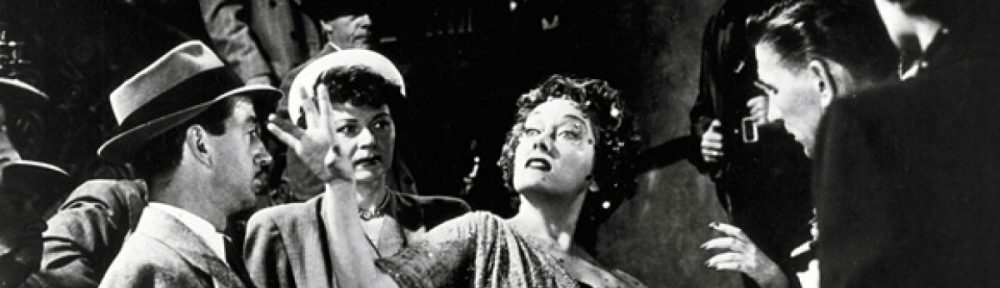
Remember Howard Beale, the anchorman played by Peter Finch in the film “Network?” I always think of his “mad as hell” moment when I see the latest example of 24 hour cable news networks like MSNBC and CNN and Fox shamelessly pumping overdoses of adrenaline and fear into anything they characterize as “breaking news.” Video is played and replayed, graphics and special effects get more and more dramatic, any pseudo-expert who claims to have a legitimate “Dr.” is instantly anointed an authority, the voices of announcers take on an unintentionally hilarious pseudo-gravitas, and we are off and running on our latest social panic.

Yes, I understand that the business model requires that an audience be delivered to advertisers. If audience research has genuinely shown that hyper-ventilation attracts larger audiences, more power to them. At least in the new age of digital information, we have alternatives like RSS feeds, the Internet, radio, local newspapers, blogs and all the other new technologies and techniques.

So if there are so many other choices offering the same content, why does this nutty hyper-activity still bother me? It’s that I can’t shake the fact that there are still large audiences being subjected to “news on crystal meth” whose world view is being shaped by the idea that the basic elements of human life are “fast-breaking,” “urgent,” and “exclusive.”

Hyping a balloon trip across New Mexico or a butcher closing after 30 years is one thing. But what about all the times when the news has to do with some aspect of life, health or safety that really affects the way people live? What if the news is about the efficacy of a medication? The recall of a food product? Or a new strain of the flu virus that was not covered by the last flu shot? A terrorist incident? A crib with a defective mechanism?

This is where the breathlessness and hyper-hyping can do its real dirty work, pumping up the volume so high that basic facts get lost amidst the cacophony. Let’s say the news is calling a widely used medication into question. Pity the viewer who really needs to hear the nuanced findings that will allow him or her to make an informed decision. And what of the stories completely buried under the avalanche, like the risk of falling among older citizens. Fear-hyping, call it FYPING, makes it all but impossible to communicate this nuance with care and concern for the people whose lives are affected. And how long is news actually “breaking?”

I have seen stories on the AP wire in the morning that 12 hours later are still being reported by MSNBC’s Dan Abrams with an ominous breaking news logo and nerve-shattering theme music.

Of course the answer is that the news is only breaking as long as we let it, as long we listen or watch. But never, ever try to tell me that in matters of true urgency, where health and safety are really on the line, that this is how you most effectively communicate the specific information that people really need. CNN’s Sanjay Gupta and MSNBC’s Robert Bazell are notable exceptions, but most of the time frenzy reigns supreme.

And all we get is the adrenaline without the content. The fear. The hyping. The fyping.

Thank you Howard Beale. I’m mad as hell and I can’t take it anymore.

Digital Culture as a Response to Social and Environmental Tragedy

One of the most wonderful things about my job is being surrounded by people whose work faces social and environmental change head on. I mean, think of it: Part of what I get to do is learn from, and engage with, people who not only live and thrive amidst the breakneck speed of a digital world, but seem to be able to ride it — along with all the accompanying social change — like a wave. 

They see things I don’t see. They hear things I don’t hear.

Two people came to mind today, and I wanted  to share links to their work with you.  

I won’t try to describe the breadth of Mary Flanagan’s interests. In addition to being a pioneer in gaming for social change,  Mary has written widely about the impact of digital culture on our senses, on the way we concieve of public space, and many other topics in the growing field of psychogeography.  For a wonderful introduction to her work, check out the Tiltfactor web site and her own site 

What I wanted to share is a brief interview Mary did this week on the NPR program FutureTense about games like Peacemaker, Food Force and Darfur is Dying. Many of you may not know that gaming is right in the middle of urgent debates about war, genocide, hunger and other ongoing human tragedies. 


So here is how my catastrophically-oriented mind works. As I watched Mary’s interview and thought about these games, another tragedy was taking place this week in Antarctica: A massive  ice shelf began to collapse, apparently due to climate change. And I thought of my colleague Andrea Polli.

 polli_portrait_mic_small.jpg

Andrea spent a good portion of her sabbatical this academic year in Antarctica, focusing on the meeting point of sound, art, global change, and the environment.  Among her projects was the recording of an extraordinary series of sounds from the natural environment that are both beautiful and haunting. Included is a truly poignant recording of an iceberg breaking up that is almost impossibly sad to listen to. In fact, to get a sense of her artisitic project and vision, check out her site 90 Degrees South.

Here is another link to a WNYC broadcast in which Andrea shares her passion for sound:  Originally broadcast in March, 2007, it features Edmund Mooney, co-founder of the New York Society for Acoustic Ecology, speaking with Andrea about the New York Sound Map, a collaborative audio map of New York’s audio environment.

I’ll be very honest: My foot is just enough inside the pre-digital, “old-media” era that keeping up with a constantly evolving and expanding definition of media and culture can be a disorienting experience.

But it is nothing less than thrilling to watch colleagues like these navigate a world so confidently that was unimaginable even just a few short years ago.

Supporting Actors? Character Actors? How About Just Actors?

I collect supporting actors, character actors. I revere them. I “cast” them. I watch feature films just to see their ten minutes of brilliance.  Part of this comes from my Dad.  

Like anyone who has even remotely participated in our family’s gene pool, he at one point got the acting bug. Unfortunately,  his screen career was limited to about 15 seconds as an extra in the 1949 film “Bad Boy,” when – sentenced along with Audie Murphy to a juvenile delinquency facility — he can be seen on camera rising up in anger and threatening the judge. (By the way, he was great!)

As I grew up, each re-run of “Bad Boy” would be an opportunity for a real family celebration. We would gather around the television, wait for the scene, watch his brief grimace, and cheer. And that is when I started watching these actors. 


I don’t know why I feel funny using the term “character actor.”  It has always  seemed  to demean the brilliance I would see in their performances, suggesting limitations rather than versatility. I know that some people use the term as high praise. I finally settled on “actor.”   

My favorite recent example – out of hundreds — is the absolutely brilliant Ned Eisenberg. In the first fifteen minutes of Oliver Stone’s World Trade Center, Eisenberg – playing one of the Port  Authority police officers heading toward the towers – arrives on the scene and simply looks up.  But his reaction, so full of complexity and bewilderment and fear, and lasting no more than a brief moment, haunts the rest of the film.  His character knows that he has been instantly thrust into the worst day of his life. And we know this because of one subtle, nuanced and masterfully delivered glance.  


But I am a huge fan of these masters of their craft and wanted to share some absolutely random names. They could just as easily be followed by hundreds of others. Some occasionally made their way into starring roles, but their greatest moments were often glances, smirks, grimaces, or blank stares into the distance.

Thelma Ritter, Edward Arnold, Dabbs Greer, Robert Loggia, Ruby Dee, Andrew Robinson, Ward Bond, Robert Walker, Morris Ankrum, Charley Grapewin, Alfre Woodard, Ned Eisenberg, Paul Meurisse, Jane Withers, John Doman, Amanda Randolph, Margaret Dumont, Miriam Colon, Guy Kibbee, Barnard Hughes, Harry Dean Stanton, William Daniels, Bruno Kirby, H.B. Warner.       

Who would you include? Full-blown, leading-role movie stars are ineligible.

A Thunderbolt from William Faulkner

My friend and colleague Mick Hurbis-Cherrier sent me this extraordinary and completely unexpected example of a speech of transcendent eloquence.  It was a timely and embarrassing reminder of how instinctively I still sometimes think of speeches as something that politicians do.  Thanks, Mick. 

Steve, I can’t thank you enough for the compendium of moving speeches you’ve posted here.  It reminds us that there was, and still is, nobility among our political leaders, and therefore in the voters and supporters who gave them these platforms to begin with.  These speeches also remind us of how much work there is to be done in confronting  racism and sexism (which has also reared its ugly head in this primary) despair and cynicism. 

In any case, I too was moved by Obama’s speech like I have never been moved by a political speech since before I was able to vote: honest, personal, complex, important and dead on.  I’ve heard writers, professors, friends, community leaders, colleagues, etc. talk like this, but never someone who was seeking a critical mass of votes to win national office.  You see, my political consciousness began with Watergate and late Vietnam (the American embassy in Saigon was evacuated on my 11th birthday, which made it a solemn occasion).  I cast my first presidential vote for Jimmy Carter when he lost to Ronald Reagan.  B. Clinton’s presidency was the only bright spot in an otherwise depressing experience for me as a voter in presidential elections (Reagan x2, Bush x3) and even that ended in a severe disappointment. 

And along with everyone else, I’ve witnessed the near total erosion of eloquence, substance and inspiration in political speech making.  So much have presidential hopefuls learned over these years to be more careful and less substantive with their speeches, that I was beginning to feel that anyone who held profound or complex ideas, and a desire to speak truthfully, was essentially ill equipped to be elected president in this country after so much Reagan and Bush can you blame me for thinking this?  (BTW, I never understood why Regan was dubbed “the great communicator” and I never understood people who said that George W. Bush is a guy they’d like to have a beer with, talk about dull company!)  

Anyway, I wanted to share a speech which “struck this kid like a thunderbolt” when I discovered it browsing the public library shelves as a 13 year-old, which I did a lot (like you, I was a weird kid in some ways).  This speech, which addresses being a writer (artist in general) in a cold war era on the brink of nuclear apocalypse, continues to be inspirational and influential for me, as only something which tags your consciousness at a tender age can be.  It’s not a speech made in my lifetime and it’s not a speech by a political figure, but it shares, with all the speeches you’ve posted, a fervent appeal to our collective humanity which, one hopes, remains a greater force on one’s actions than the specific crises of the day.  It is through our humanity (the recognition of ourselves in others and the recognition of the best we can be in ourselves) that we can move toward progress rather than slide back into bitterness, hatred and revenge (as RFK says in his MLK speech).  

In his speech on race, Obama quoted William Faulkner’s famous line from Requiem for a Nun, “The past isn’t dead and buried. In fact, it isn’t even past,”  (btw. Faulkner’s actual line is: “The past is never dead. It’s not even past.”). This reference reminded me of William Faulkner’s speech upon receiving the Nobel Prize for Literature in 1950, the text of which I am submitting here.  Nikki Giovanni’s fiercely healing poem to Virginia Tech, which you posted, stands as a perfect example of what Faulkner is talking about.

Mick

Acceptance Speech by William Faulkner, Nobel Prize in Literature, December 10, 1950

What Words Have Touched Your “Better Angels?” Send Me a Speech!

I have a request.  If any of you have ever  been haunted or inspired by a speech, tell me about it in a comment below.   I might even be able to find audio or video and post it for everyone to see.

By the way, I know that some of you have been enraged rather than inspired by speeches. If you took my course on the propaganda of war and genocide, you have heard them too. In fact, I have probably heard more ugliness than inspiration.  Someday we might even post a “top ten” list of the most vile and hateful speeches of all time.

But every so often I really get tired of all the ugliness that people inflict on each other and find I need a dose of what Lincoln called the “better angels of our nature.” So let’s stick with inspiration, with love, with selflessness. What speeches  have inspired to you to reach for those angels?

We can always get to the ugliness another time.

Eloquence That Struck a Kid Like a Thunderbolt Part#2

U.S. Representative Barbara Jordan’s Keynote Address to 1976 Democratic Convention, July 12, 1976 

Senator Obama – with his willingness to speak so openly about our nation’s shameful racial history — almost certainly stands on the shoulders of this extraordinary woman.  I am not sure I have ever heard any human being speak with such moral authority and so openly about race. She was a singular leader for people of color, for women, for the disabled and for all Americans.  I would have followed Barbara Jordan to the gates of heaven or hell, although if you happen to be looking for her, I have no doubt at which of those two locations she can be found.    

Senator Robert Kennedy’s Tribute to His Brother John. Democratic National Convention. August 27, 1964, Atlantic City, New Jersey

Within a year of his brother’s assassination, Kennedy stood before the convention and through his tears, in my favorite use ever of a Shakespeare line in a political setting, used these lines from Romeo and Juliet to speak of his brother.  

… when he shall die, Take him and cut him out in little stars, And he will make the face of heaven so fine that all the world will be in love with night. And pay no worship to the garish sun. 

“We Are Virginia Tech:” Poet Nikki Giovanni, Virginia Tech Memorial Service, April 17, 2007

To speak to those who are hurt and grieving right after a tragic act, and give voice to pain that seems to defy expression, is one of the highest callings of a speech. At just the moment when so many of us find ourselves paralyzed by grief, we ask someone of wisdom and eloquence to find the right words and to do it as they struggle to surmount their own grief. Few have ever done it more profoundly than Nikki Giovanni did in the aftermath of the Virginia Tech tragedy.

A Mystery Speech 

Actually, I’m not being cute. I have kept it a mystery because I am ashamed of who delivered it.  That’s right, some of my favorite lines from a political speech were uttered by someone who was given the public trust and proceeded to destroy himself and the country with almost nightmarish scorn for the rule of law.  I am pretty sure I know the identity of the speechwriter who actually wrote these words (it wasn’t the man who delivered them), and they still move me.

It does, though, raise the fair question of whether the words of a public figure can or should ever be considered separately from their subsequent actions. Because, for me, appreciating these words requires an almost complete  suspension of the knowledge of who spoke them. But they still moved me, and I have put my favorite lines are in bold. 

To a crisis of the spirit, we need an answer of the spirit. To find that answer, we need only look within ourselves.  When we listen to “the better angels of our nature,” we find that they celebrate the simple things, the basic things—such as goodness, decency, love, kindness.  Greatness comes in simple trappings. The simple things are the ones most needed today if we are to surmount what divides us, and cement what unites us. To lower our voices would be a simple thing…..We cannot learn from one another until we stop shouting at one another—until we speak quietly enough so that our words can be heard as well as our voices.

Eloquence That Struck a Kid Like a Thunderbolt Part #1

I have been thinking a lot about political speeches this week. Because, while many of you at the age of nine were doing cool kid stuff, I was often hidden away following politics and watching or listening to speeches. I ate them up. I loved the high drama, the displays of courage, the revelations of cowardice, and the occasional moments of eloquence. Yes, I was a little weird.

(Don’t feel too bad for me. I also loved skateboarding, tree-climbing, Leave it to Beaver, Mighty Mouse, Chef Boyardee, and had a crush on a girl in my 6th grade class that was a killer!)

Seriously, Senator Obama’s speech on race is what got me thinking. I almost choked when I heard him opening up the darkest places where our society’s secret and hidden and subtle racism still festers.  He opened a discussion that — if we join in, regardless of the candidate we support — will mean going toward the ugliness rather than away from it. It will mean examining what James Ellroy, referring not to race but to family trauma, has  called “My Dark Places.” We may or may not be ready. But out of the hurt just might come healing.  

So I thought I would share with you some of the other speeches or examples of improvised public rhetoric that have moved me over the years. They are seared in my memory. And for this go-round, I am limiting myself to speeches by Americans. More to come soon from many places around the world.  

Attorney Joseph Welch Confronts Senator Joseph McCarthy at the Senate “Army-McCarthy Hearings. June 9, 1954 

At the height of Senator McCarthy’s reign of terror, he launched a particularly vicious attack on a young lawyer named Fred Fisher unfairly accused of communist sympathies.  Rising to Fisher’s defense with barely contained rage — surrounded by hundreds or reporters and legislators with in a crowded Senate room — Fisher’s law partner Joseph Welch of the Boston law firm of Hale and Dorr essentially destroyed Senator McCarthy with a thundering statement that included the famous “Have you no sense of decency?” 


“I Have a Dream” Martin Luther King, March on Washington, August 28, 1963   

I include this not as a formality, but because it shook me to my core for a very special and still embarrassing reason: I lived in a completely white community and had never had any personal contact with an African American. None. I was 12 years old. Never even a shake of the hand or a nod in the street. No contact. I didn’t know the world King was describing. In some ways, northern suburbs were as segregated as the deep south. And then the floodgates, then this speech. 

Stump speech by President Lyndon Baines Johnson. Summer, 1964. Downey, California. 

When my Dad took me to see an LBJ campaign rally, I only knew the deadly boring television speeches LBJ gave and the mounting Viet Nam war dead. No one I recall was more awkward and less eloquent on television. What I didn’t know then was that, when the topic was the humiliation of poverty that had marked his youth and haunted him his whole life, and when he was speaking without a script, he was one of the greatest and most inspiring stump speakers ever.  

RFK Announcement of MLK Assassination, April 4, 1968 This is the greatest speech I have ever heard. Period. RFK had nothing less than the task of announcing  MLK’s assassination to a largely African American crowd in Indianapolis. My eyes moisten just typing these words. All I can say is: Please listen to it. In fact, file it away after you have listened to it and have it ready to play any time you have to deal with some grief or loss.  

 Part #2 coming soon

More on Pseudoexperts, Teletherapists, and Lemmings

I wanted to thank the folks at Broadcast Newsroom’s portal for picking up my post on the phony teletherapists  and self-help vultures who are already hard at the ethically dubious task of solving Eliot Spitzer’s marital problems by long distance.

They have a “Volume Control” column that pulls comments about broadcasting issues and controversies from the blogosphere. It’s worth a look.

And while you are at it, check out one of the worst offenders, who from the comfort of The Today Show studio — without meeting with or treating any of the involved parties — blames Mrs. Spitzer for Mr. Spitzer’s acts.

Using unethical, long-distance teletherapy for publicity is one thing. I just wonder how supposed professionals — however dubious their credentials — sleep at night knowing they made diagnostic and prescriptve statements about real, hurting people using news reports.

http://www.msnbc.msn.com/id/23575221/

I remember something I wrote when I started this blog:

“….sometimes people seem to forget that …….they are addressing other people with their own deeply-felt feelings, fears and vulnerabilities. Staying aware of our basic humanness in a disembodied digital age is no small challenge when your adversary might be a continent way. We have relationships with people we never see.   But it is imperative, lest we gain our Blackberries only to lose our hearts and souls.”

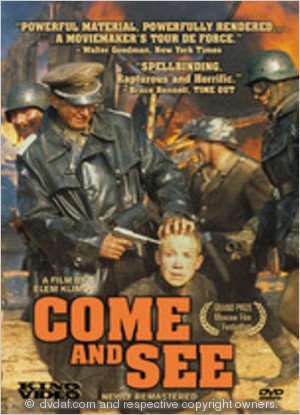
Elem Klimov’s “Come and See” (1985)

Since I am frequently watching films, the idea of occasionally recommending only one seems almost peculiar,  especially given how many have entranced me since the days I cut political science courses as a freshman at UCLA to spend 12 hour days in the Melnitz film archives.

But I would like to limit recommendations in this blog to a different class of film that comes along every so often. These are the “residue” films that transcend even the best of the medium and — almost always through compelling narrative and character development — leave you with a residue of sadness or nightmare or unresolved moral dillema that you couldn’t shake if you tried.  These films are emotional traps, in the best sense of the word. Sometimes for years.

I am sure many of you know the feeling. You’ll be walking along and you suddenly realise that you are still “living” in a film you saw months before.  The narrative might have had a superficial exit of sorts,  but that same exit slammed shut if you were seeking an easy psychological way out from the film’s emotional complexity or challenging moral dillemas.

The best way I know how to make this distinction is recalling the day my daughter’s hampster died. She was inconsolable, for five minutes at most, and then wanted to know if we were still going out for pizza. First the pathos and then, even more quickly, the pepperoni.

Yet in the years that followed, when the same daughter  (and all of us)  lost Michael,  a wonderful, creative and occasionally insufferable friend to HIV/AIDS, we entered a space that still surrounds us more than 15 years later. I am talking about films that do something like this.  

Thanks to my colleague Mick Hurbis Cherrier’s suggestion of one film,  I am now entering my third month stuck in a relentless nightmare of war. So let me recommend Elem Klmov’s “Come and See.” We had been arguing in the department whether, per Truffaut’s assertion,  anti-war films were impossible because of the inevitable tendency of film to aestheticize horror. 

So Mick pulled this film out of his hat, and in one viewing, Truffaut’s claim — for me at least — was demolished. 

Check it out. You’ll never be the same. This is war — relentlessly sad, horrifyingly violent, and morally confusing.  A nightmare.

 come-and-see.jpg

I’m Having Chest Pains

Help!

Governor Spitzer has resigned. Necessary. Inevitable. Sad.

But I really may not survive all the lemmings now swarming all over  cable news — the teletherapists, the experts, the columnists, the whole  pseudoexpertocracy — who have already started providing detailed remedies for the saving the Spitzer marriage and  for what he should say to his children.

These “crisis-vultures” — armed with glib instant analyses — never cease to amaze. One person’s and one state’s tragedy becomes someone else’s shameless career opportunity.

Beware the Self-Proclaimed Moral Paragons

Someone breaks the bonds of trust with the public.  In an instant, he squanders all his political capital and his reform agenda is dead in the water. He resigns.  His family and children are devastated. Maybe his family holds, maybe not. And yes, the whole tragedy is completely self-inflicted. And yes, the man apparently has virtually no well of affection outside his family from which he can  draw either sustenance or survival.

But here’s what I want to know:  What’s with the piling on ? What’s with this this public competition to see who can be the most indignant? Just who are these people so certain of their own virtue, so confident that they are beyond human flaws,  that they are tripping over each other to get in front of a camera and proclaim their credentials as moral paragons?

People have every right to be angry with the Governor. The press must take on this story with all the zeal it deserves. It’s serious stuff. But if we know even the simplest things about human nature, it is that  the very group of those now clamoring to raise the public scaffold almost certainly includes some of the very people who themselves will be hoisted onto that scaffold in due time. 

Indignation is justifed. But spare me the kind of angry and hypocritical over-acting that is more strategic angling for political advantage than genuine disappointment with a Governor who let us down big. Indignation is one thing, but there is a moment when it morphs into self-righteousness. The morphing has begun.

And maybe, just for a fleeting moment, think about the non-combatants here — his children  — who deserve only our compassion and concern.

What Microsoft Execs Were Secretly Saying About Vista

Get a load of this.

I am a PC guy working in a MAC-heavy environment. I love PCs. But these MAC users are people skilled in digital media and new technologies who use it for a whole host of impeccably argued reasons. I mean, I work with people who actually futz with the inside and outside of their machine and write code.

Cool code-writers!

These are also people who know why — in exquisite detail — they don’t use a PC running on Windows.

I immediately thought of them today when I read Randall Stross’s amazing Digital Domain column in the New York Times. (Registration required) It turns out that Microsoft execs not only knew know that VISTA was a lemon, but that they were exchanging brutally frank emails about its mind-boggling lemonishness.

When you have studied and taught about rumor and urban  legend, you know that the miasma that is culture and the marketplace often has some pretty weird and ludicrous stuff circulating about various brands and products.

But the noise about a VISTA disaster wasn’t legend, wasn’t rumor.  And we know this now precisely because the very stratosphere of the Windows development and sales team was saying it.

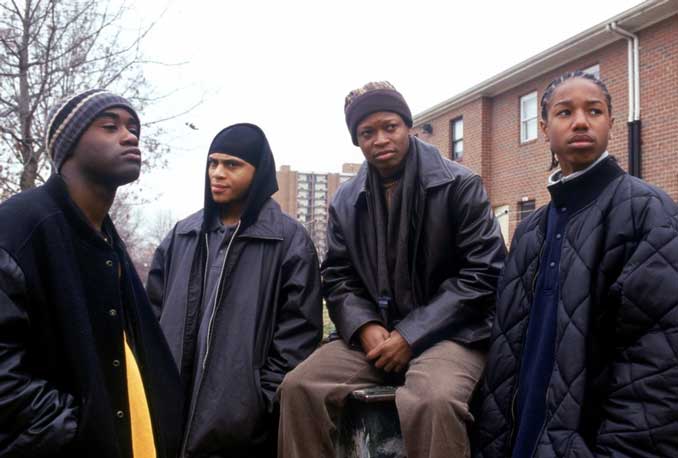
The End of “The Wire:” Say it Ain’t So.

Three episodes into the first season of The Wire, I had a sinking feeling. Someday this story will simply stop. Someday these characters will be frozen in time. The dead ones will stay dead and the survivors will live forever in a tableau of their last moment on screen.

It’s over on Sunday.

That I even had these feelings is testimony to the exquisite skill of David Simon, Ed Burns, and all the others responsible for The Wire. I had given up on episodic television, with its conventions and predictability and paper-thin characters. Yet after only a few episodes, the elaborately crafted character and story development that would become The Wire’s trademark had me obsessed with learning every possible thing about these characters. I needed to know what would happen to them. And most of all, given the fully realized living-nightmare that was Simon’s Baltimore, I had to know how and when they would die. Death hung like a oppressive shadow over The Wire, always a possibility in even the simplest, most mundane moments. And when it came, it felt like a shot to the head, fired from behind with no warning.

David Simon generously gaveth and mercilessly “tooketh”  away characters. In fact, so many carefully drawn characters passed through so many story lines that no obit for the show could do it justice. But there are a few things about how it was crafted that will always be there to be treasured and savored.

Gratuitous things did not happen in Simon-land. Sex, violence, blood, nudity, atrocious language and everything else that NYPD Blue used to use with such a self-concious, heavy-hand had to earn their way onto The Wire. They only made it when they advanced the story or moved a character forward. I’ll never forget when one of the show’s creators, during the audio commentary offered in the DVD collection, saw an especially white-hot sex scene and remarked something like: “Wow, that was great wasn’t it. We should do more sex.” But they quickly concluded that the sex would only happen if and when the story or the character needed it to happen. Same with violence. When it came, it was the culmination of careful narrative preparation. But it was never, ever predictable.

Enough story lines were constantly dangling that every episode was an adventure in seeing which would be picked up and which would never be heard from again. One attractive young woman came on the scene for a couple of episodes, captivated the audience with beautifully written lines, created a heart-breaking character, and simply disappeared. She wasn’t killed. She was the victim of the kind of dramatic fatality that only happens in brilliant scripts — death by compelling narrative.

Which leads to my last point: No show was ever cast with such care and skill. In fact, as I face the show’s demise, I have been having the strangest thought: What is going to happen to this once-in-a-lifetime ensemble? How can stage, television, and film absorb them all at once? And what about all the quirky, weird characters, masterfully portrayed by actors who, stated charitably, did not exactly have conventional faces? I have a fantasy of casting agents all over the world keeping a special “Wire” book, with headshots and resumes of a slew of the best actors working today.

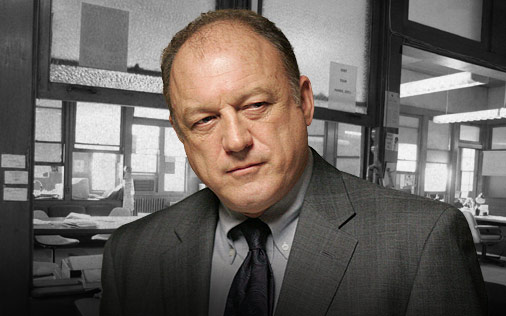
Ill leave you with the almost unbelievable gift that this Wire fan got two days ago on the #6 subway in Manhattan. I walked onto the crowded train and saw only one empty seat. And in an instant, as I sat down, I looked up to find that I was sitting next to one of my favorite characters, played by an actor of such power that I literally started to shake as I complimented him. He was gracious, I looked like a fool, and then he was gone.

So I can think of no better tribute to The Wire’s endless parade of masters of the craft of acting than to share his picture with you and designate the incomparable John Doman, Deputy Commissioner William Rawls, as my stand-in for the best cast ever assembled for a television drama.

Rawls — you arrogant, backstabbing, selfish, hateful, self-hating creep — I don’t know how we’ll live without you.


Great Moments from Political Debates #1

Over the years, there have been  some great examples of what happens in political debates when candidates stray from their scripts or stump speeches.

Sometimes, in a moment of anger and spontaneity, they say something astoundingly and revealingly dumb. Other times, they get lost in the moment and reveal a personal characteristic that all of their advisers had hoped would stay hidden. And finally, sometimes  history is made when a debater thinks of precisely the right retort or putdown at precisely the right moment.

It’s funny, but I don’t ever remember someone losing it to the point of uttering mongo expletives, but some of you may have an example.

Remember this one? Perhaps the most legendary debate putdown in American history.

 More to come.

Winning Presents Problems

The most skilled and smart politicians I have observed and known generally follow an election result by asking one of two questions: If they won, they want to figure out any tactics or words they used in the campaign that might that cause them problems down the line. “What wounds did I inflict to win that I now have to heal?”If they lost, they want to figure out every opportunity that the loss might have created any new doors that might have been opened when the others closed. “Is there something new I can try?”

So if Hillary wins any combination of primaries and ultimately the nomination, she’ll have to assess the damage done by the negative campaigning that exit polls show many people resented. Hillary will ask: “Who did I alienate and how do I fix that? How do I get Obama supporters?

If Obama wins, he’ll need to come to terms with how and why his strategy did well with white males and African Americans, yet was largely unable to attract older white women, a fairly large demographic group. Barack will ask: “Did sexism drive the votes of some of my supporters and what do I have to do about that? How do I get Clinton supporters?

McCain, now the nominee, has to come to terms with the extent to which his courting of the extreme right might have alienated centrists and how much his courting of the centrists might have alienated conservatives. McCain will ask: How do I move back toward the center without alienating people.

Winning a nomination creates as many problems as it solves.

High Drama and a Strange Nine Year-Old Kid

There is nothing more boring than an old guy who starts babbling about the old days.

Gimme just a second for babbling.

I grew up just long enough ago to be able to watch, in between episodes of Leave it to Beaver and Father Knows Best, absolutely vicious and contested televised fights for presidential nominations. Many candidates were not nominated until messy fights on the floors of conventions. You really had to see it to believe it. I’m talking about politics that sometimes resembled the World Wrestling Federation.

I might have only been nine years-old, but I was a truly strange nine year-old, and to this day I remember skipping my Popeye cartoons and being mesmerized as I watched the 1960 Democratic convention on television and seeing Bobby Kennedy running around the floor rounding up votes to seal the deal for his brother John. And I recall the 1964 Democratic convention when a group of heroic African American delegates from Mississippi, the Freedom Democrats led by 20th century civil rights icon Fannie Lou Hamer, fought to be recognized. So what’s my point?

You may be understandably sick of the whole business. No matter who you support, you might be looking at the other candidate and feeling that enough is enough. Fair enough.But let’s not let our fatigue divert our attention from the fact that, with a woman and an African American candidate, we are watching the kind of high political drama that all of us will remember for years. I envy those seeing it for the first time. Watch and learn.The old guy has babbled.

After This Post, I Am Going to See if My Sleeping Daughter is Safe

Well, I’ve learned my lesson. If I try to show some restraint, I inevitably allow a festering resentment to continue to – well – fester. So let be more direct and say it for the last time.

The first Clinton “sleeping children” ad crossed a line.  

I detest the use of children in any advertisement or media content to foster or encourage fear. Children face so many less-visible and legitimate threats — everything from reckless drivers to substandard schools to hunger to racism and sexism — that to even give the impression that your opponent is a threat to the safety of sleeping children is ridiculous. Check out Joel Best’s brilliant “Threatened Children for the history of how fear and children have been a volatile and incendiary mix in American culture. 

And that’s what I think was in that ad. If you show children sleeping in a dark, creepy room, you imply – on some level — that someone is coming who will scare them or wake then up or hurt them. Just look at that ad and see the worried face of the mother who checks to see if they are alright. 

I know how flacks defend ads like this: “The ad was not intended to scare anyone but to call attention to the differences in experience between the candidates. Crises do occur and the voters blah blah blah blah blah and another blah. 

Please stop.

If you want to bring kids up, show us how you are going to treasure them and nurture them with sound public policy, not how your presidency will keep creepy people out of their bedrooms.

The Mother of All Fear-Based Political Advertisements

Alright, I am ready to get off my ”kids and fear in political advertising” kick, but thought I should end by sharing the famous daisy commercial.

Take a look at the classic  “vote for me or your kids might be in danger” ad.   The almost unbearable irony of watching this now is the realization that the candidate in this ad who in 1964 was promising to keep kids like me safe, President Lyndon Johnson, proceeded to escalate a war in Viet Nam that killed thousands upon thousands of those same kids.  

Truth in advertising: Barack Obama is my candidate. But I know that some of you who see this blog are my students and it is important to me that you feel free to make your own political choices.

But neither did it seem to make much sense to hide my choice.

Obama Strikes Back With His Sleeping Kids

Now the Obama campaign has struck back with their own sleeping kids.

Is this a presidential campaign or a remake of “When a Stranger Calls?”

The next commercial will probably have a voice saying: “We’ve traced the call. It’s the next President and it’s coming from inside the house.”

How Would You Explain a Mistake Like This To Your Editor? This Really Happened Today.

BULLETIN KILL

WASHINGTON — Kill the short headline in BC-White House-Plagiarism, 9th Ld, which moved at 6:35 p.m. EST. A presidential aide resigned, not Bush.

The AP

Hosted by 
Copyright © 2008 The Associated Press. All rights reserved.